Choosing the right ceiling fan size is crucial for achieving optimal airflow in your space. Many homeowners often ask, "what size ceiling fan do I need?" According to John Smith, a renowned expert in home ventilation, "Selecting the proper fan size ensures efficient air circulation and energy savings."
When deciding on a ceiling fan, it's essential to consider the room's square footage. A fan that is too small will struggle to circulate air effectively. Conversely, a fan that is too large may overpower the space and create an uncomfortable breeze.
Understanding your space allows you to make an informed decision. If you have high ceilings, a larger fan may be necessary for proper airflow. Often, people neglect this factor, leading to dissatisfaction with performance. Reflecting on the specific dimensions of your room can guide you toward an excellent choice.
Factors Affecting Ceiling Fan Size Selection
When selecting the right ceiling fan size, several factors play a role. Room dimensions are crucial. Larger rooms need bigger fans for effective airflow. Ceiling height also matters. A fan too low may hinder air circulation, while one placed too high can be ineffective. Consider the layout as well. If there are obstacles, like beams or large furniture, airflow may be disrupted.
Another key factor is the fan blade span. Typically, a fan should have a span that correlates with the room size. For rooms under 100 square feet, a 36-inch blade is usually sufficient. For larger areas, you might need a span of 52 inches or more. Room usage plays a part too; a fan in a bedroom may require different airflow than one in a living room.
Tips: Pay attention to the fan's CFM rating, which tells you how effectively it moves air. This is especially important in humid climates. Consider using multiple smaller fans instead of one large fan for more targeted airflow. Always measure your space before shopping. This helps avoid purchasing a fan that simply won’t work.
Best Ceiling Fan Sizes You Need for Optimal Airflow
| Room Size (sq ft) |
Recommended Fan Size (Inches) |
Airflow Efficiency (CFM) |
Ideal Usage |
| 100 - 200 |
36 - 42 |
1,500 - 3,000 |
Small rooms, bedrooms |
| 200 - 400 |
44 - 50 |
3,000 - 4,500 |
Living rooms, dining rooms |
| 400 - 600 |
52 - 56 |
4,500 - 6,000 |
Large rooms, open areas |
| 600+ |
60+ |
6,000+ |
Great rooms, outdoor spaces |
Recommended Ceiling Fan Sizes for Different Room Dimensions
Choosing the right ceiling fan size for your room can significantly enhance airflow and comfort. For small rooms, like a home office or bedroom under 100 square feet, a fan with a blade span of 29 to 36 inches is ideal. This size can effectively circulate air without overwhelming the space. Many homeowners overlook this when selecting a fan, but the right dimensions can make a noticeable difference.
In larger areas, such as living rooms over 200 square feet, opt for fans with a blade span of 52 inches or more. These fans can move more air, providing better cooling. It's important to consider ceiling height too. A fan should hang about 7 to 9 feet above the floor for optimal performance. This height ensures efficient airflow without creating a draft. Despite these guidelines, trial and error can happen. Sometimes, a fan that looks great in a showroom may not function as expected in your room.
Another common mistake is selecting a fan based solely on aesthetics. The style is important, but size and functionality should take precedence. If airflow is insufficient, you may find comfort compromised. Pay attention to how air feels while the fan operates. Don’t hesitate to reassess your choice if it doesn't meet your airflow needs.
How Ceiling Fan Size Impacts Airflow Efficiency
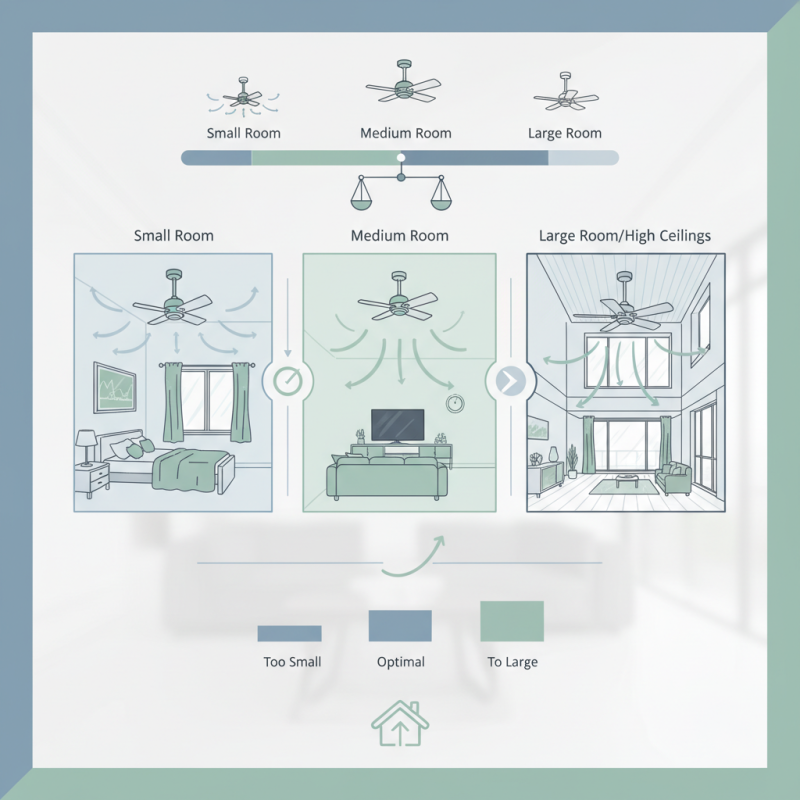
Choosing the right ceiling fan size is crucial for achieving optimal airflow in your space. A fan that’s too small may struggle to circulate air effectively. Conversely, an oversized fan can cause discomfort due to excessive airflow. Understanding how size impacts airflow efficiency can enhance your comfort level in any room.
Ceiling fans work best when matched to the room size. For small rooms (up to 75 sq. ft.), a fan with a blade span of 29 to 36 inches is ideal. Medium rooms (up to 144 sq. ft.) need a span of 44 inches. Larger spaces (beyond 144 sq. ft.) benefit from fans with spans of 50 inches or more. The goal is to create a gentle breeze, making the environment feel cooler without creating a wind tunnel.
**Tips:** Measure your room before buying. Pay attention to ceiling height as well. A flush mount might suit lower ceilings better. A fan's mounting position impacts how effectively it circulates air. Remember, not all spaces are equal; framing should fit your unique layout. Reflecting on your choices and their outcomes can help refine your selection for future needs.
Tips for Optimal Ceiling Fan Placement and Height
Ceiling fan placement and height are crucial for optimal airflow. According to the American Society of Heating, Refrigerating and Air-Conditioning Engineers (ASHRAE), ceiling fans should be positioned to maximize their cooling efficiency. Ideally, the fan should hang 8 to 9 feet above the floor. This height helps distribute air evenly throughout the room.
When considering placement, focus on the room's dimensions. A fan should be placed at least 3 feet away from any walls. This distance prevents air from getting trapped, ensuring proper circulation. For larger rooms, multiple fans may be necessary, positioned to cover the entire space without leaving any hot spots.
Tip: Always install the fan so that it can rotate counterclockwise in summer and clockwise in winter. This simple adjustment can significantly increase comfort levels. In winter, fans should be set to low speed to redistribute warm air.
Remember, the ideal fan size also plays a role in effectiveness. Fans that are too small may not produce enough airflow. Conversely, an excessively large fan can be overpowering. Regularly reassess your fan's performance as room layouts or furniture arrangements change.
Importance of Blade Pitch in Ceiling Fan Performance
Blade pitch is a crucial factor in ceiling fan performance. It refers to the angle of the blades in relation to the fan's body. A higher pitch creates more airflow. Fans with a pitch of 12 to 15 degrees are generally optimal for better air circulation. They move a significant volume of air, cooling your space effectively.
However, not everyone considers blade pitch when purchasing a fan. Many people focus solely on size or style. This oversight can lead to unsatisfactory performance. For example, a fan with a low pitch may look stylish but fail to deliver on airflow during hot summer days. It’s a mistake that can negatively impact comfort levels.
Understanding blade pitch can enhance your buying experience. Knowledge is power, especially when selecting a ceiling fan. Don’t be swayed by design alone. Consider the practical aspects. It’s worth measuring your space and comparing fan specs. This investment in research leads to better air circulation and comfort.
FAQS
: For rooms under 100 square feet, a fan with a blade span of 29 to 36 inches works well.
Fans should hang 7 to 9 feet above the floor for optimal airflow and comfort.
A small fan may struggle to circulate air effectively, compromising comfort in the room.
No, size and functionality should be prioritized over aesthetics for effective airflow.
A ceiling fan should be at least 3 feet away from walls to prevent trapped air.
Yes, using multiple fans can cover a larger space and eliminate hot spots.
Change the rotation to counterclockwise in summer and clockwise in winter for optimal comfort.
Regularly observe how well it circulates air and reassess if room arrangement changes.
Medium rooms up to 144 square feet need a fan with a blade span of 44 inches.
Yes, sometimes a fan that looks great doesn’t perform as expected in your space.
Conclusion
When considering what size ceiling fan do I need for optimal airflow, several factors come into play, including room dimensions, ceiling height, and the intended use of the space. It's essential to select a fan that matches the size of the room to maximize air circulation and efficiency. For instance, larger rooms typically require bigger fans or more than one fan, while smaller spaces may benefit from compact designs.
Additionally, the height at which the fan is placed and the blade pitch significantly affect airflow performance. Proper placement can enhance air distribution, ensuring comfort throughout the room. A fan with an appropriate blade pitch will also improve efficiency, making it a key factor in selecting the best ceiling fan for your needs. By considering these elements, you can achieve optimal airflow and comfort in your living spaces.

 Fanpro Light