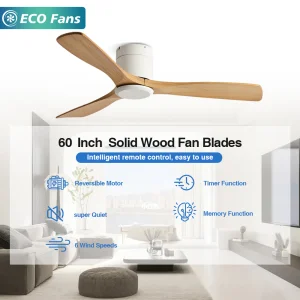
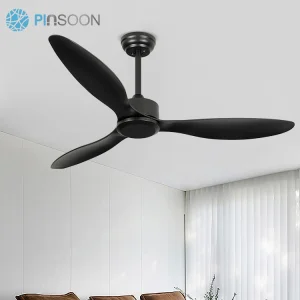
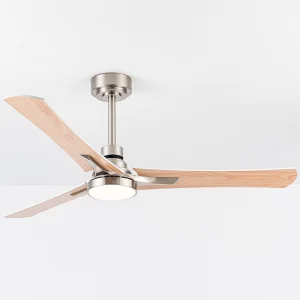
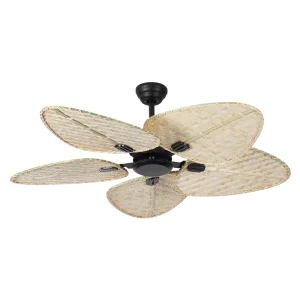
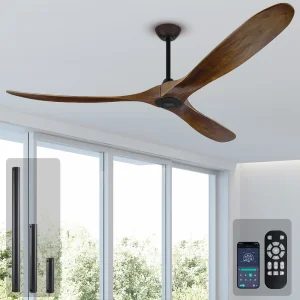
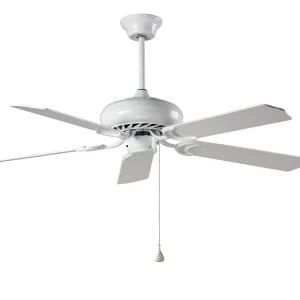
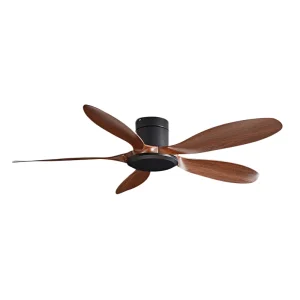
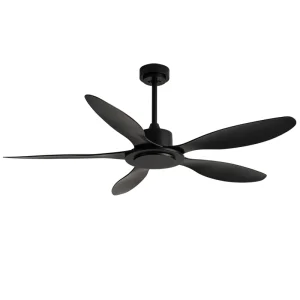
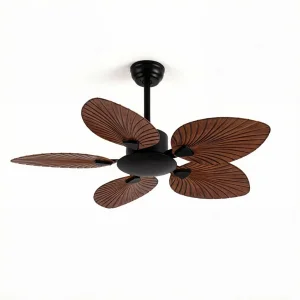
Explore our premium architectural and residential cooling solutions engineered specifically for decoupled lighting layouts and superior aerodynamic delivery.
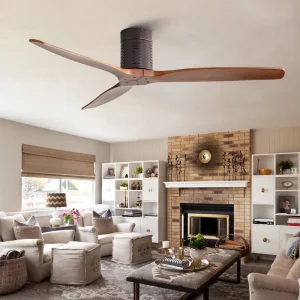
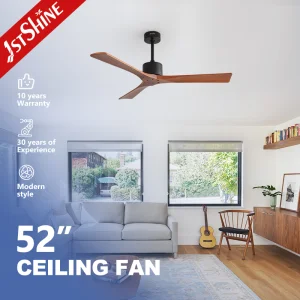
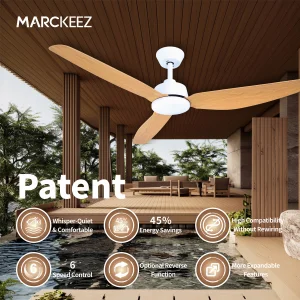
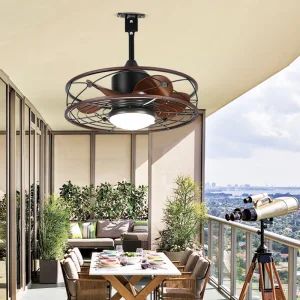
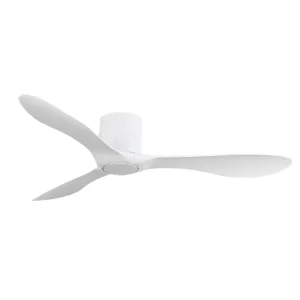
In the domain of commercial mechanical engineering, HVAC optimization, and premium interior architecture, the selection of air circulation equipment has transitioned from a superficial decorative choice to a critical element of energy management and occupant comfort. In particular, the specification of ceiling fans without lights has emerged as a professional standard. This whitepaper analyzes the engineering logic, energy dynamics, and system integrations that make light-free ceiling fans the optimal choice for smart buildings, commercial offices, hospitality venues, and modern residential developments.
From an architectural lighting and MEP (Mechanical, Electrical, Plumbing) engineering perspective, combining a lighting fixture and an air displacement device into a single unit introduces significant technical compromises. The primary issue is the stroboscopic effect (flicker). When light is projected through or around spinning blades, it creates high-frequency shadow fluctuations. This visual disturbance can cause eye strain, migraines, and reduced productivity in workspaces.
By keeping lighting and air circulation separate, engineers can position luminaires precisely to meet unified lighting requirements while placing ceiling fans where they can best regulate temperature. Furthermore, modern commercial buildings rely on centralized protocols like DALI (Digital Addressable Lighting Interface) or KNX to control illumination. At the same time, HVAC systems manage airflow via Modbus or BACnet. Integrating a fan with a built-in light complicates these control setups. Dedicated ceiling fans without lights allow for clean wiring, independent relays, and simpler automation integration.
"Decoupling ambient illumination from kinetic thermal regulation is not merely an aesthetic preference; it is a fundamental engineering strategy to eliminate optical flicker, simplify control circuitry, and optimize spatial energy distribution."
Dongguan Fanpro Light Co., Ltd. continues to advance the engineering standards for light-free air circulators. Our R&D efforts focus on three core areas: electrical efficiency, blade aerodynamics, and smart integration.
Utilizing high-grade NdFeB permanent magnets and FOC (Field Oriented Control) sine-wave drivers. This delivers up to 70% energy savings compared to traditional AC motor configurations, reducing operating temperatures and extending bearing life to over 100,000 continuous hours.
Designed using computational fluid dynamics (CFD). Our solid wood, ABS, and aluminum alloy blades feature specific airfoil profiles that maximize cubic feet per minute (CFM) displacement while keeping acoustic output below 32 dB(A)—well under standard office and hotel ambient noise levels.
Native integration with Tuya, Zigbee, Wi-Fi, and RS485 Modbus networks. Allows facilities managers to program centralized operation schedules, leverage multi-fan grouping, and automate fan speeds based on real-time ambient temperature and humidity sensor feedback.
In large-volume spaces, air naturally stratifies: warm air rises to the ceiling, while cooler air remains near the floor. This forces HVAC systems to run longer to maintain comfortable target temperatures in the occupied zone (the first 2 meters above the floor). Light-free ceiling fans help address this by providing continuous, low-velocity destratification. By gently pushing warm air downward and mixing the air layers, they equalize the temperature gradient. This helps HVAC systems run more efficiently, reducing heating and cooling costs by up to 25% depending on the building's layout and climate.
During cooling cycles, the gentle airflow creates a wind-chill effect on human skin. This convective cooling makes the ambient temperature feel roughly 2°C to 3°C cooler than the thermostat setting. As a result, facility operators can raise thermostat setpoints without sacrificing occupant comfort, yielding measurable energy savings over time.
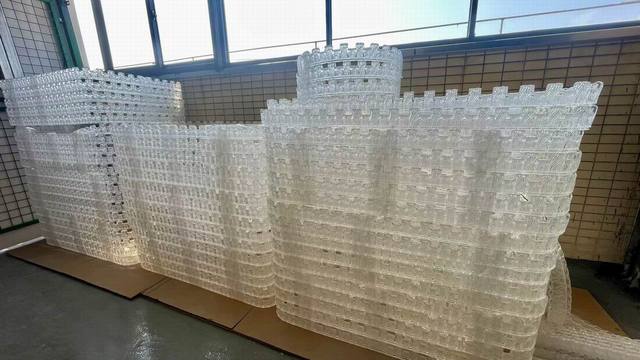
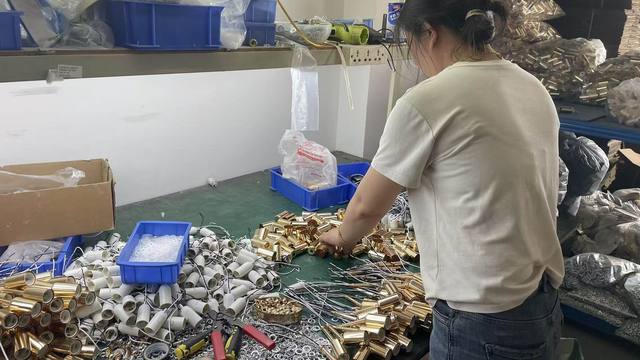
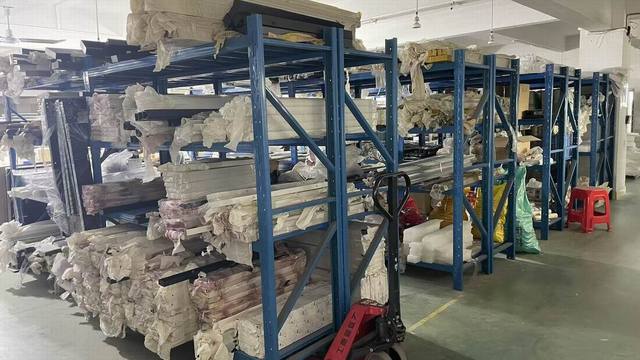
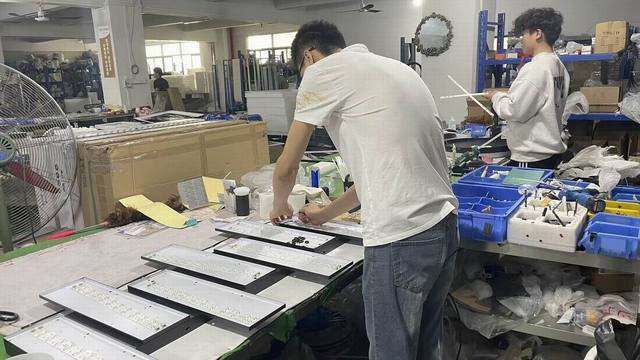
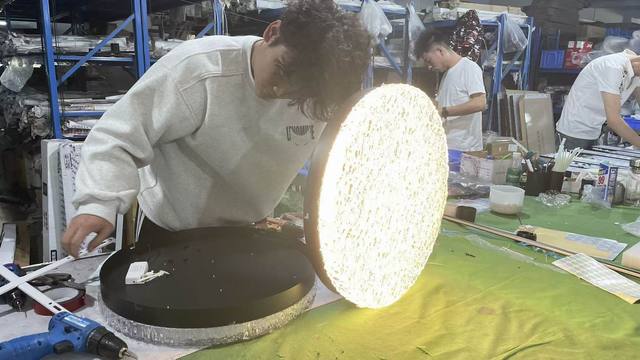
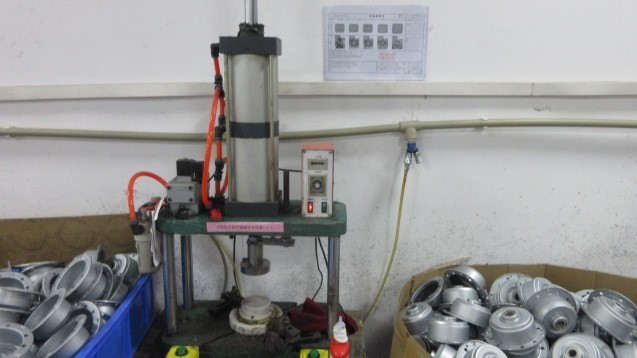
Based in Dongguan, Guangdong—the center of global electronics and hardware manufacturing—Dongguan Fanpro Light Co., Ltd. runs a highly vertical production model across a modern 12,000-square-meter facility.
| Engineering Parameters | Standard Commercial Grade | Fanpro Industrial BLDC Grade | Project Advantage |
|---|---|---|---|
| Motor Type & Core | AC Induction Motor | Brushless DC (BLDC) Sine Wave | Up to 70% power saving, lower thermals |
| Acoustic Level | 42 dB(A) - 55 dB(A) | < 30 dB(A) at operational speed | Perfect for hotel suites and quiet workspaces |
| Warranty Cycles | 1 - 2 Years | 5 - 10 Years (Motor Core) | Significantly reduced long-term maintenance costs |
| BMS Integration | None (Manual/RF) | Modbus RS485 / Zigbee / WiFi | Centralized control via building automation |
Navigating different international electrical codes and safety standards is critical for major project procurement. Dongguan Fanpro Light Co., Ltd. maintains a dedicated compliance department to ensure all exports align with local market regulations:
Dongguan Fanpro Light Co., Ltd. is a specialized ceiling fan manufacturer focused on the design, engineering, and export of smart DC motor ceiling fans and air circulation systems.
Modern Production Facility
Skilled Technicians & Engineers
Full-Scope Customization Partners
UL, ETL, CE, SAA, RoHS Compliant




Expert engineering answers addressing technical requirements, logistics, customization workflows, and installation specifications.
Review our specialized collection of low-profile, solid wood, and high-velocity utility fans designed for commercial environments and residential spaces.
 Fanpro Light