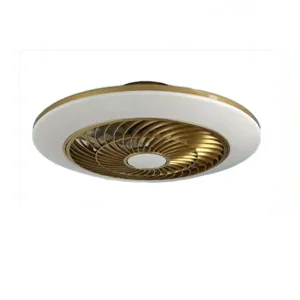
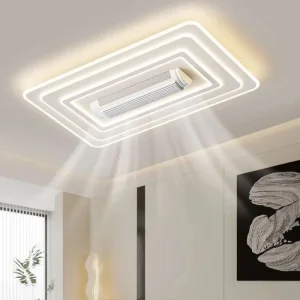
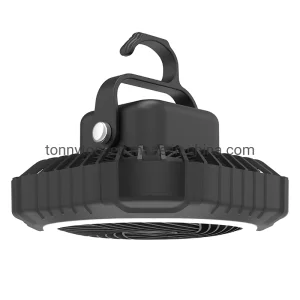
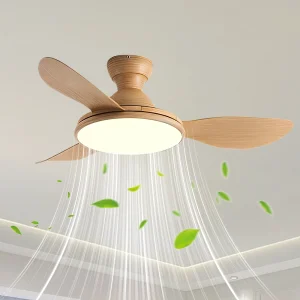
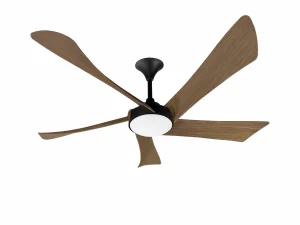
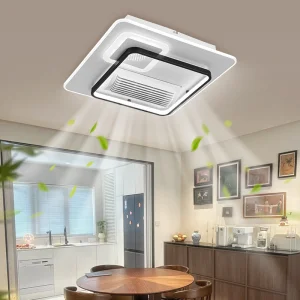
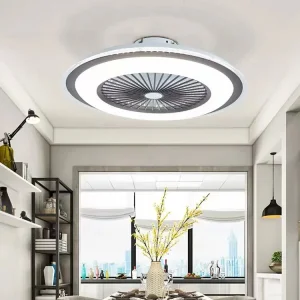
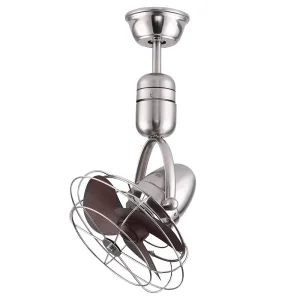
In modern architecture and environmental planning, the boundary between interior sanctuaries and exterior environments has dissolved. High-end residential properties, luxury hospitality resorts, and open-air commercial complexes increasingly employ biophilic design philosophies. This spatial integration drives the exponential demand for decorative outdoor ceiling fans that do not merely offer functional air displacement but act as pivotal architectural elements.
Historically, outdoor fans were industrial, visually unappealing, and highly susceptible to ambient decay. Today, structural evolution is led by China decorative outdoor ceiling fan factories that fuse advanced aerospace blade profiles with premium decorative elements. Material science is at the forefront of this shift: standard plastics have been replaced by premium engineering polymers such as UV-stabilized ABS (Acrylonitrile Butadiene Styrene), and marine-grade die-cast aluminum alloys. These components are treated with fluorocarbon coatings to endure intense ultraviolet degradation, high salinity, and thermal fluctuations without physical deformation or aesthetic loss.
Modern structural design relies on dynamic air movement rather than static refrigeration. Continuous, soft laminar airflow reduces the apparent temperature on human skin by 3°C to 5°C through natural evaporation, optimizing comfort in open pavilions, verandas, and seaside patios while expelling flying insects without chemical intervention.
Engineering fluid-dynamic blade structures to generate high CFM (Cubic Feet per Minute) while operating under 35 decibels, creating tranquil outdoor environments.
Integration of specialized moisture-proofing systems for motors, including double-sealed ball bearings and hydrophobic internal PCB coatings.
Unified architectures that interface seamlessly with international building management networks and local smart-home integrations.
For global procurement specialists, distributors, and engineering contractors, selecting a China best decorative outdoor ceiling fan manufacturer demands a rigorous evaluation of design capabilities and supply chain ecosystems. The international sourcing process is fraught with risks, from structural mechanical discrepancies to long-term oxidation of internal components. Partnering with a comprehensive manufacturer that consolidates industrial design, raw materials processing, precision motor winding, and multi-tier quality assurance under one roof is critical to mitigating these variables.
Leading manufacturers, such as Dongguan Fanpro Light Co., Ltd., operate within highly advanced manufacturing hubs. Located in the heart of Guangdong, these facilities leverage immediate access to specialized component suppliers, advanced CNC tooling shops, and third-party testing centers. The key to successful B2B customization (OEM/ODM) lies in the manufacturer’s capability to tailor products to regional climate demands and electrical grid standards:
Adjusting winding resistance for 110V-120V (North America) vs. 220V-240V (Europe & Australia) to maximize electrical efficiency and thermal dissipation.
Customizing blade pitch angles (ranging from 12° to 16°) and choosing between natural wood, compressed bamboo, or lightweight ABS blades to balance airflow and structural torque.
Applying specific military-grade marine finishes, multi-layer oil-rubbed bronze, or simulated wood grains that can pass rigorous ASTM environmental tests.
Integrating robust control components with built-in surge protections to handle remote-control systems and fluctuating voltages in tropical installations.
In the engineering specification of outdoor air circulation systems, the terminology of environmental resistance dictates safety, reliability, and project viability. Underwriters Laboratories (UL) and the International Electrotechnical Commission (IEC) lay down precise guidelines:
Designed for covered outdoor areas, such as screened patios, covered decks, and verandas. The design parameters safeguard the motor assemblies against high humidity, moisture buildup, and condensation, but do not support exposure to direct, driving liquid spray.
Engineered to withstand direct contact with rain, snow, and heavy water exposure. These require hermetically sealed motor housings, moisture-proof electrical junctions, and non-porous blades. Wet-rated fans are cleaned by hosing them down directly.
International standards define precise protection ratings (such as IP44 and IP55). An IP55 rating certifies that the internal mechanics are protected against limited dust ingress and low-pressure water jets from any direction.
A primary challenge for developers in coastal areas is high-salinity corrosion. Standard steel screws and structural brackets will corrode rapidly, leading to mechanical failures. Chinese manufacturers of high repute address this through the use of 316-grade stainless steel hardware, zinc-plated internal components, and specialized composite polymer blades. Additionally, these fans must undergo rigorous ASTM B117 salt spray testing (for 200 hours or more) to ensure complete operational safety in challenging marine environments.
The global transition toward carbon neutrality and rising energy costs has driven the ceiling fan industry to innovate at the motor level. Traditional alternating current (AC) motors, which convert up to 70% of energy into heat, are quickly being phased out in high-spec projects.
Brushless DC (BLDC) motors and Permanent Magnet Synchronous Motors (PMSM) have set new benchmarks. These motors utilize electronic commutation, decreasing power draw by 60% to 70% compared to traditional AC motors. A 35-watt BLDC fan can deliver higher CFM and structural torque than an 80-watt AC counterpart, reducing the workload of building electrical infrastructures and minimizing long-term operational costs.
Furthermore, modern outdoor ceiling fans are transitioning into active nodes within home and building automation systems. Smart control boards, integrated with Wi-Fi, Bluetooth Mesh, Zigbee, or Matter protocols, enable fans to automatically coordinate with environmental systems. Temperature and humidity sensors can trigger specific speed settings to maximize comfort. Advanced features like reverse airflow (reclaiming warm air trapped under high ceilings during colder months) and programmed schedules can all be controlled via mobile apps or voice assistants (Google Assistant, Alexa).
Established in 2012 in Dongguan, Guangdong, Dongguan Fanpro Light Co., Ltd. has established itself as an industry leader in smart, decorative, and energy-efficient ceiling fan solutions. Underpinned by advanced engineering capabilities, global quality control standards, and a deep commitment to OEM and ODM partnerships, the company offers a comprehensive service model for architects, distributors, and builders worldwide.
Fanpro Light's product portfolio is engineered to meet a variety of demanding applications. From smart, app-controlled fans and quiet DC-motor options to wet-rated, durable outdoor models and industrial-grade air-movement systems, our products undergo meticulous testing. This testing evaluates air volume, electrical endurance, salt spray corrosion resistance, and motor heat dissipation to ensure compliance with strict international safety and quality standards (including CE, RoHS, CB, SAA, and UL certifications).

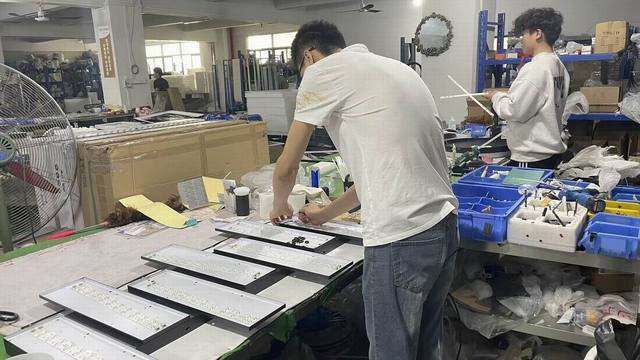
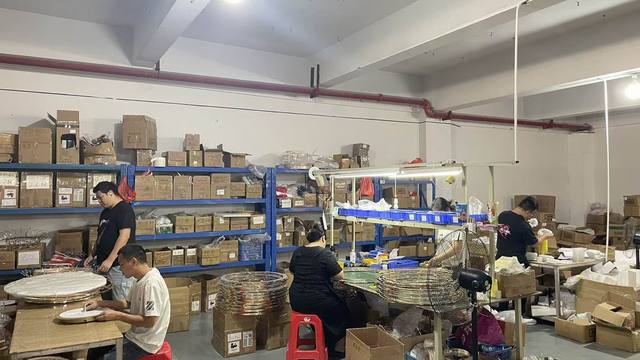
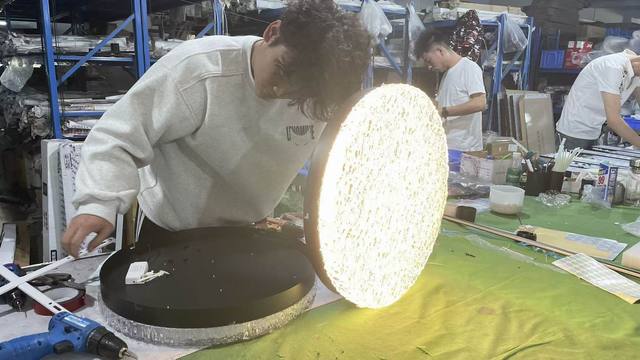

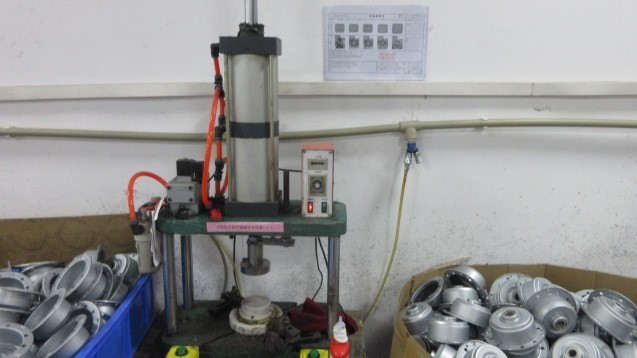
To prevent corrosion and failure, fans in coastal environments must feature high-grade aluminum, ABS, or composite polymer components. Hardware and fasteners must be made of marine-grade 316 stainless steel. Crucially, the motor casing must be sealed to protect internal stator windings from moisture and salt-laden air, and components should be tested for rust resistance under ASTM B117 standards.
BLDC (Brushless Direct Current) motors operate using permanent magnets and electronic commutation. This eliminates the frictional energy losses, wear-and-tear, and heat generation associated with carbon brushes in traditional AC motors. As a result, BLDC motors reduce power consumption by up to 70%, run cooler and quieter, and extend the overall lifespan of the system.
Modern smart fans are engineered with wireless control modules supporting Zigbee, Matter, or standard Wi-Fi protocols. This enables direct integration into smart home systems or commercial Building Management Systems (BMS). Using central controls, facility managers can adjust speeds, schedule operations, and monitor power usage across entire zones to optimize energy efficiency.
Damp-rated fans are designed for covered areas where humidity is high, but direct water contact is prevented (such as porches, garages, and covered patios). Wet-rated fans, by contrast, are designed to withstand direct exposure to rain, snow, and condensation. They feature specialized water-tight seals on all electrical connections, waterproof housings, and specialized all-weather blades.
 Fanpro Light