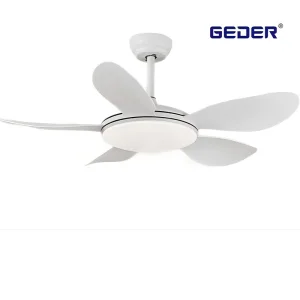
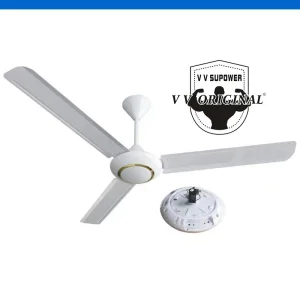
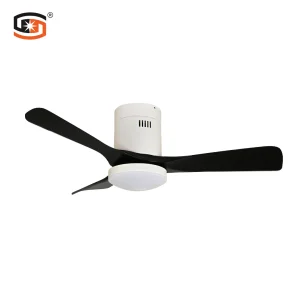
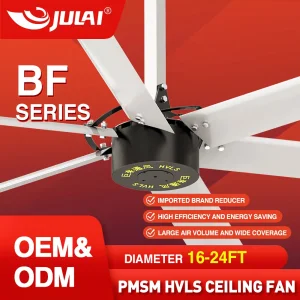
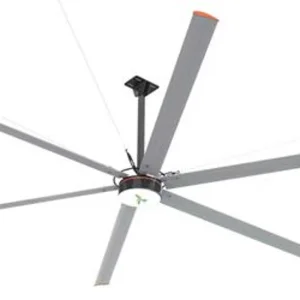
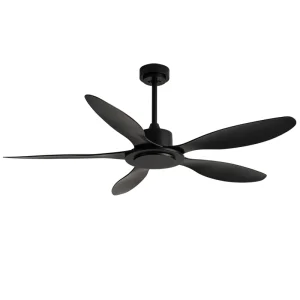
Discover our highly-engineered industrial, commercial, and residential ceiling fans designed for maximized air volume and intelligent thermal displacement.
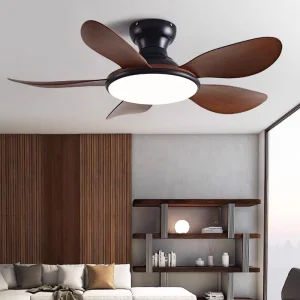
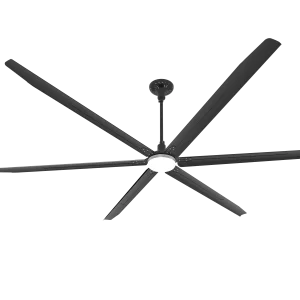

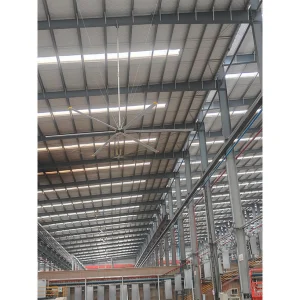
Modern commercial and industrial architectures demand HVAC interventions that transcend conventional boundary-layer physics. "Enhanced Airflow" is not merely a marketing term; it is a rigorous calculation of fluid dynamic efficiency. It refers to the optimization of volumetric flow rates (typically measured in Cubic Feet per Minute, or CFM) relative to power consumption (Watts). This ratio, known as air delivery efficiency (CFM/W), governs the operating costs and sustainability ratings of modern structures.
By leveraging advanced aerodynamic modeling, such as Computational Fluid Dynamics (CFD), custom OEM manufacturers configure blade pitch angles, chord lengths, and aerofoil geometries. This minimizes drag and prevents the development of localized stall regions along the blades. The result is a massive, cohesive column of air that moves down to the floor, spreading out in a 360-degree direction to establish an omnidirectional breeze layer. This process, known as de-stratification, actively eliminates thermal pockets and optimizes temperature uniformity across expansive heights.
For large-scale warehouses, logistics hubs, and commercial centers, conventional HVAC systems consume a prohibitive amount of power trying to maintain target temperatures. When integrated with large-diameter ceiling fans, specifically High-Volume Low-Speed (HVLS) models, facility managers can raise their thermostat setpoints by up to 3 to 5 degrees Celsius without compromising worker comfort. This strategy reduces HVAC runtime, leading to energy savings of up to 30% during cooling seasons and 50% during heating seasons via hot air de-stratification.
"By utilizing aerodynamic blade optimization and permanent magnet synchronous motors, we achieve up to 85% energy efficiency conversion compared to legacy AC induction motor systems." — Dongguan Fanpro Light Technical Engineering Team
A macroeconomic perspective on global ventilation needs, sustainable energy mandates, and localized infrastructure demands.
With ASHRAE 90.1 and IECC standards placing strict limits on energy usage intensity (EUI) in commercial buildings, building developers are turning to high-efficiency BLDC and HVLS fans to secure green building certifications (LEED v4.1). Custom OEM integrations allow developers to combine smart fan telemetry directly with computerized Building Management Systems (BMS).
Under the ErP Directive (2009/125/EC), EU importers require fan equipment to meet rigorous energy efficiency benchmarks. The shift away from standard AC motors to highly efficient permanent magnet synchronous motors (PMSM) has become a regulatory mandate rather than a preference. Our designs guarantee compliance with CE and RoHS standards.
Rapid industrialization, warehouse automation, and mega-logistics hubs across India, Vietnam, and Indonesia require heavy-duty thermal regulation. In these hot, humid climates, enhanced airflow systems reduce heat stress, boosting labor productivity by up to 15% and preventing moisture build-up that damages goods and packaging.
The convergence of mechanical precision, materials science, and smart IoT control logic.
The core of modern airflow innovation lies in the transition from traditional alternating current (AC) motors to brushless direct current (BLDC) motors. Our BLDC motors feature an all-copper winding configuration paired with permanent neodymium magnets. This design eliminates carbon brush friction, reducing energy losses and heat generation.
Because BLDC motors operate without mechanical friction, they run with minimal noise (often below 35 dB). This makes them ideal for noise-sensitive locations like hotels, residential buildings, and open-plan offices. Integrated sensorless field-oriented control (FOC) algorithms allow for smooth speed transitions, preventing power spikes and ensuring stable torque output across the entire speed range.
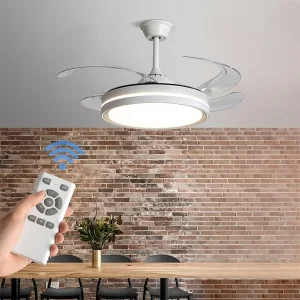
Modern fan networks are no longer isolated mechanical fixtures. As smart buildings evolve, our fans integrate Tuya Smart, Wi-Fi, and Zigbee protocol controllers. These platforms enable remote control, programmatic scheduling, and compatibility with building automation software.
The performance of a ceiling fan relies heavily on the aerodynamics of its blades. Standard flat blades push air downward inefficiently, creating high-turbulence pockets. Our custom OEM designs feature calculated chord profiles and winglet tips, similar to aircraft wings, which minimize blade-tip vortices and reduce aerodynamic drag.
Depending on the environment, we use specialized materials for our blades:
A professional OEM/ODM partner providing integrated engineering, manufacturing, and global exporting services.
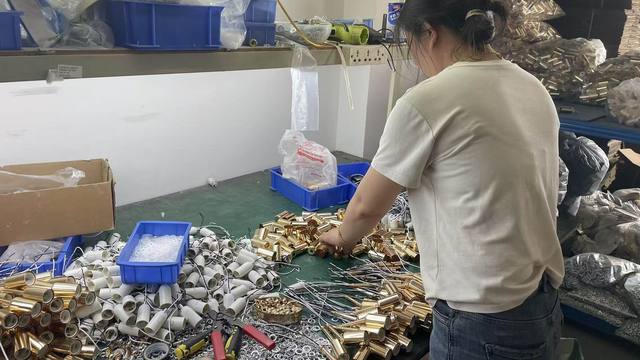
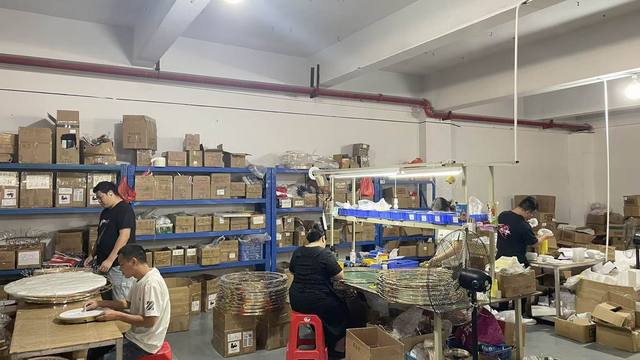
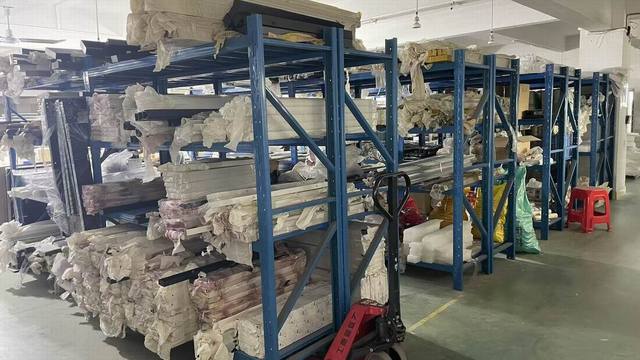
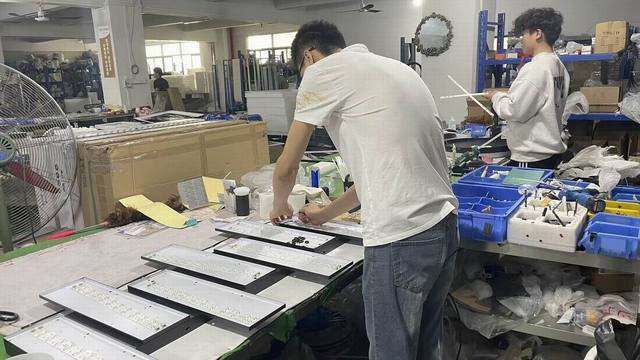
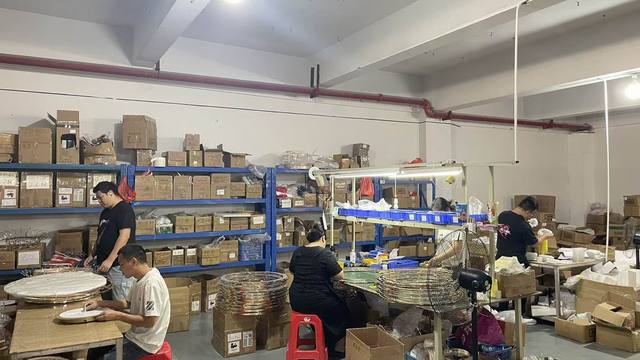
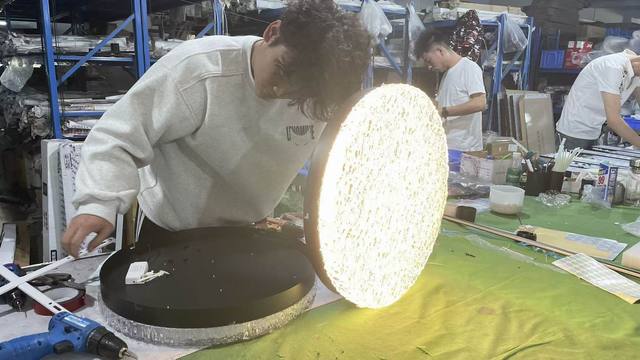
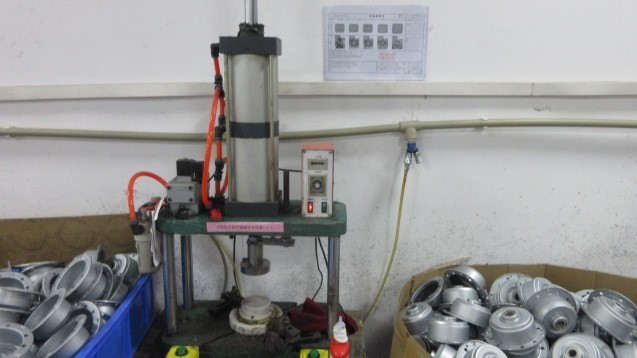
Established in 2012 in the manufacturing hub of Dongguan, Guangdong, Dongguan Fanpro Light Co., Ltd. is a leading manufacturer specializing in smart ceiling fans, DC motor air circulators, and industrial high-volume ventilation systems. Our facility spans over 12,000 square meters, operating multiple semi-automated assembly lines, precision CNC machining shops, and dedicated motor winding cells.
Our workforce of over 180 skilled technicians, quality engineers, and R&D designers integrates research, testing, and production under one roof. Equipped with dynamic balance analyzers, wind tunnels, and sound testing chambers, we ensure every fan leaves our warehouse with guaranteed performance and safety ratings.
As a global OEM and ODM partner, we support private labeling, custom structural engineering, and tailormade packaging designs to fit regional shipping and logistics requirements. Our export network spans North America, Europe, Australia, Southeast Asia, and the Middle East, with certifications including CE, RoHS, ETL, and SAA.
We work closely with HVAC contractors, architects, and commercial developers, providing custom air circulation solutions that align with modern energy codes and aesthetic requirements.

Key technical inquiries from mechanical engineers, HVAC consultants, and procurement managers.
Both BLDC and PMSM motors utilize permanent magnets and lack mechanical brushes. The main difference lies in the stator winding design and the shape of the back electromotive force (EMF). BLDC motors use trapezoidal stator windings and are driven by a square-wave current, whereas PMSM motors use sinusoidal windings and require a sinusoidal drive current. In practical terms, PMSM systems provide smoother torque transition and lower noise profiles, making them ideal for high-precision, large-diameter industrial HVLS applications, while BLDC motors offer excellent efficiency in residential and commercial ceiling fans.
Air stagnation occurs when air columns form distinct thermal strata, with hot air trapped at the ceiling and cool air pooling on the floor. An aerodynamic blade with a progressive pitch (varying from the root to the tip) ensures uniform air velocity distribution across the entire blade length. Winglets at the blade tips reduce the formation of air vortices, which cause drag and generate noise. By converting turbulent airflow into a smooth, laminar downward air column, the system maximizes de-stratification and ensures continuous, high-volume air movement.
Our quality control process includes: dynamic balance testing of both motors and blade sets to prevent wobble, salt-spray testing for metal components destined for outdoor or humid environments, insulation resistance testing for electrical systems, and sound level validation in anechoic chambers. For our industrial HVLS series, we conduct finite element analysis (FEA) on the blade hubs and stress-test the connection mechanisms to guarantee safety under continuous operation.
Yes. Through our smart controller integrations, our fans can communicate via Modbus, BACnet, or local Wi-Fi/Zigbee protocols. This allows facilities to program operational profiles, adjust speeds based on real-time temperature differentials, and manage multiple units from a centralized control panel, minimizing total energy consumption.
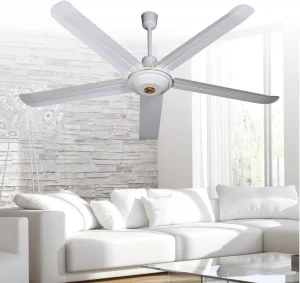
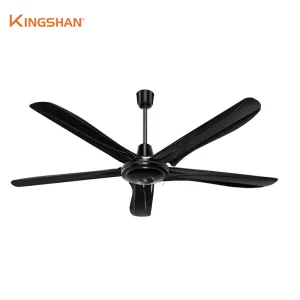
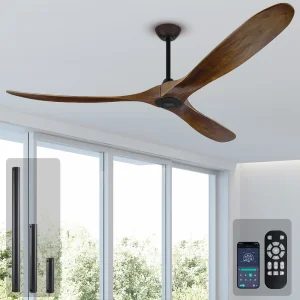
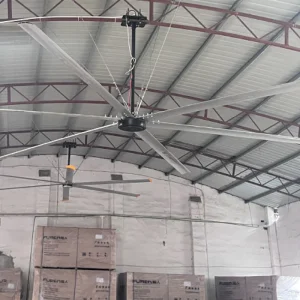
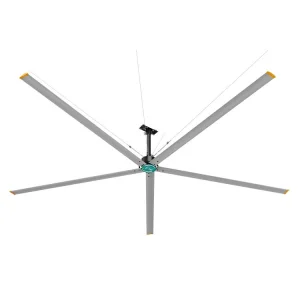
Engineered options from 48-inch residential units to 24-foot industrial HVLS systems, providing custom OEM airflow optimization.
 Fanpro Light