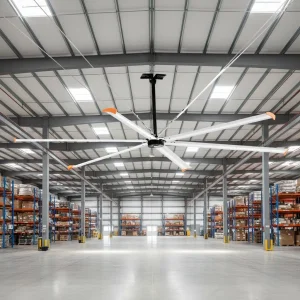
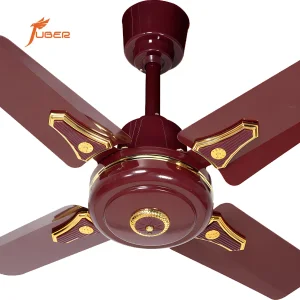
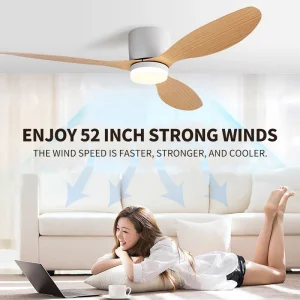
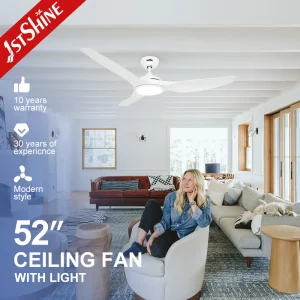
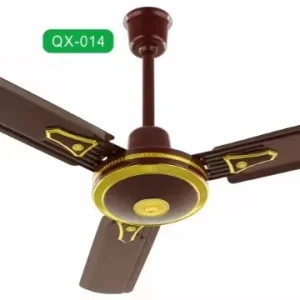
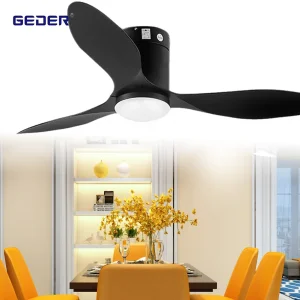
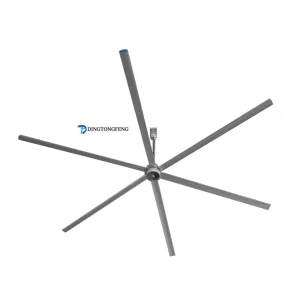
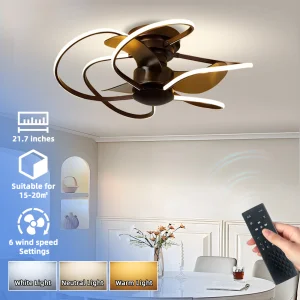
Explore our flagship product catalog designed for residential, commercial, and heavy-duty industrial applications featuring advanced reversible motor technology.
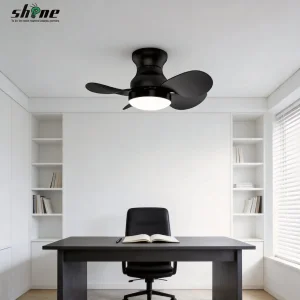
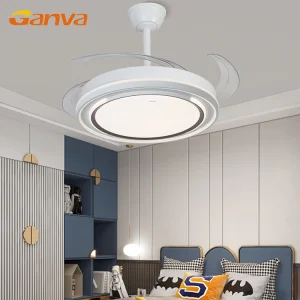
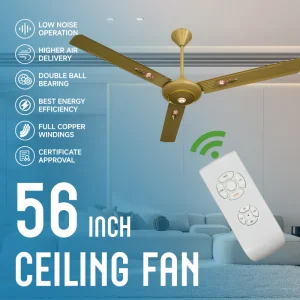
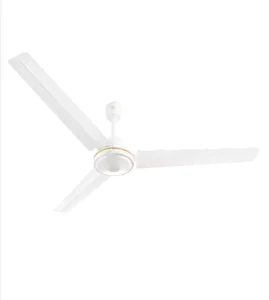
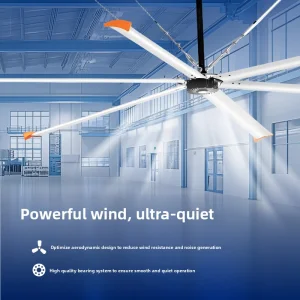
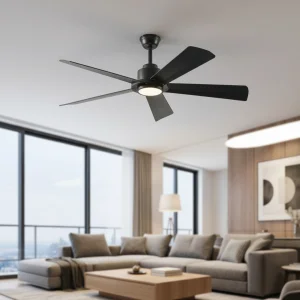
Understanding how summer/winter mode mechanics optimize climate control systems and reduce thermal load dynamics.
Ceiling fans with a reversible rotation function—widely referenced as the Winter-Summer Mode—serve as critical thermodynamic instruments in modern space planning. Air stratification occurs naturally inside buildings as thermal currents separate by temperature-related density differences. Under normal circumstances, warm air rises to the upper levels of a room (near the ceiling) because it has a lower molecular density than cooler, heavier ambient air settling at the floor level. Without mechanical intervention, this thermal stratification forces central heating, ventilation, and air conditioning (HVAC) systems to work significantly harder, leading to inflated operational costs and unbalanced localized temperatures.
By employing an aerodynamic design that switches between rotational vectors, a ceiling fan dynamically adapts to the thermodynamic needs of the environment. Under Summer Mode, the fan blades rotate in a counter-clockwise direction (when looking upward from the floor). This downward action produces a direct vertical column of air movement—often referred to as a downdraft. The resulting air current does not lower the room's physical ambient temperature; instead, it accelerates evaporative heat loss on human skin, simulating a "wind chill" effect that makes individuals perceive the space to be up to 4°C cooler.
During winter operations, reversing blade rotation to clockwise draws cold air upwards. This vertical column displacement gently redistributes ceiling-trapped heat without generating a direct cooling wind chill at floor level.
Thermal destratification via winter mode reduces the temperature gradient between floor and ceiling, allowing heating systems to run less frequently. This optimization yields heating bill reductions up to 30%.
Advanced Computational Fluid Dynamics (CFD) model blade pitch angles (typically 12° to 15°) to balance drag coefficient and mechanical torque in both forward and reverse operational modes.
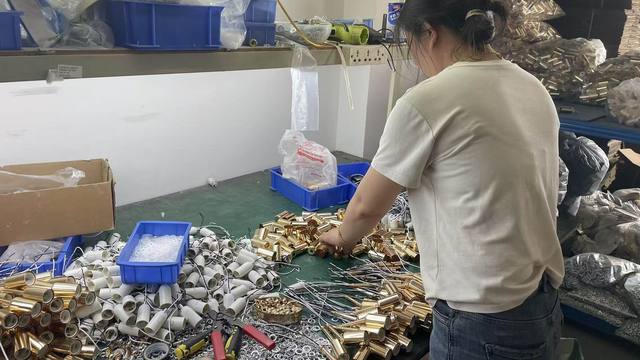
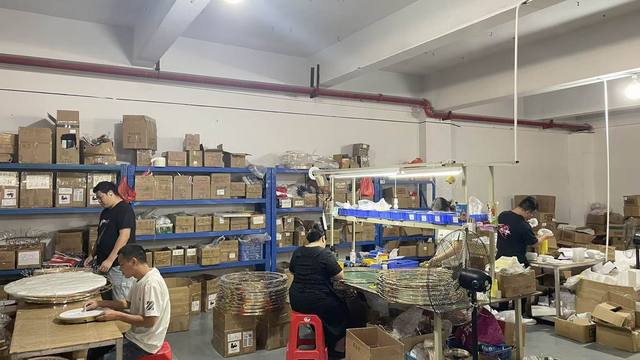
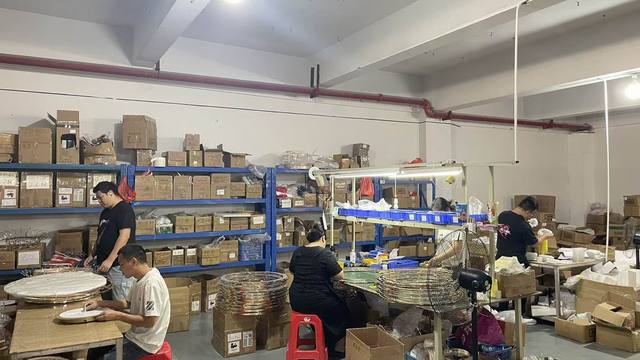
Established in 2012, Dongguan Fanpro Light Co., Ltd. has established itself as an authoritative leader in high-performance ceiling fan manufacturing. Operating out of a modernized, state-of-the-art facility covering more than 12,000 square meters in Dongguan, Guangdong, the company leverages regional supply chain integrations to deliver premier OEM and ODM services. Driven by a dedicated engineering force and over 180 skilled manufacturing professionals, Fanpro Light integrates product design, mechanical engineering, automated stator winding, dynamic balancing, and final compliance testing under one unified roof.
The factory maintains multi-tiered assembly lines alongside robust testing laboratories specializing in smart WiFi controllers, brushless DC (BLDC) motor development, air circulation physics, and decorative housing designs. By investing heavily in automated machinery and strict quality control protocols, Fanpro Light guarantees long-term durability, structural integrity, and international safety certifications across all global markets.
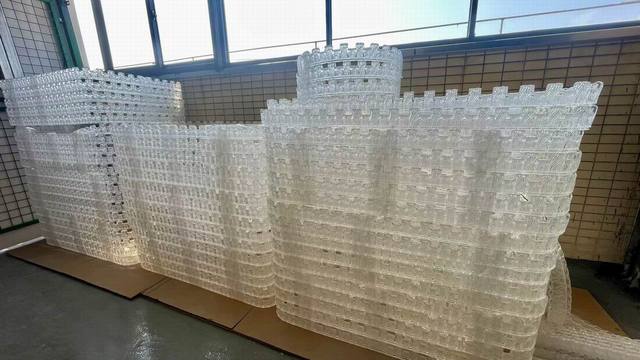
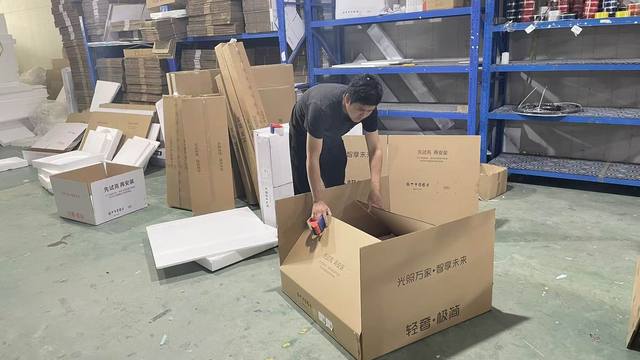
Why motor topology dictates the performance, stability, and reversible response of high-efficiency ceiling fans.
Traditional ceiling fans constructed with alternating current (AC) motors rely on induction technology, which generates significant heat and introduces mechanical friction. Reversing the rotational direction of an AC motor requires physical capacitor switching or phase rerouting. This mechanical switching introduces structural stress to the windings, limits the speed configurations, and leads to failure points over prolonged usage.
Modern high-efficiency reversible ceiling fans are built on Brushless Direct Current (BLDC) motor technology. BLDC motors utilize permanent magnets on the rotor and electromagnets on the stator, controlled by an integrated electronic commutation system (often using sinusoidal wave control algorithms). Reversing the rotation vector in a BLDC motor is executed programmatically by changing the firing sequence of the stator coils. Because this process is completely solid-state, it generates zero mechanical friction or rotational lag, allowing users to switch from Summer Downdraft to Winter Updraft effortlessly through digital controllers.
Custom-developed motor control units (MCUs) utilize sensorless sinusoidal drive electronics. This approach minimizes magnetic hum and guarantees acoustic noise levels lower than 19dB(A) in quiet environments.
Firmware options support Tuya, Zigbee 3.0, and Matter protocol suites. Smart fans dynamically monitor ambient room temperatures to transition between winter and summer operational profiles autonomously.
Integrated thermal cutoffs, transient voltage suppression, and overload protection circuits shield the internal motor control units from electrical fluctuations common in industrial settings.
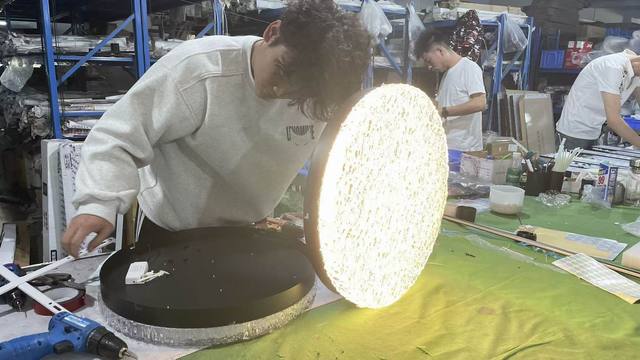
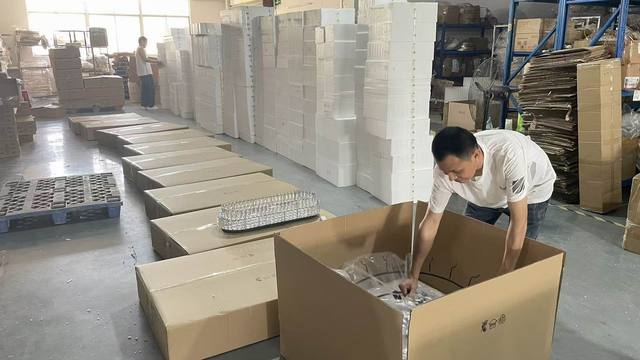
Our modernized assembly infrastructure ensures manufacturing speed, cost efficiency, and total quality assurance.
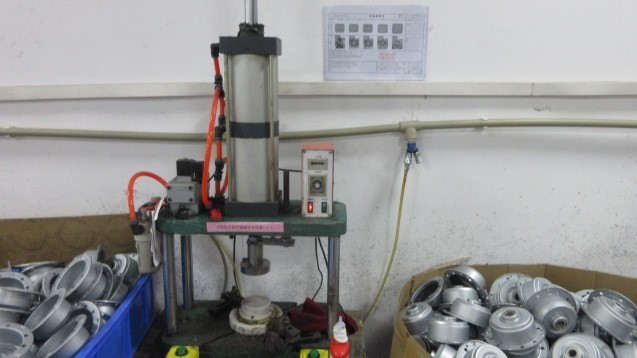
Producing energy-efficient ceiling fans that maintain high airflow capacity (CFM/watt ratios) requires robust control over manufacturing tolerances. At Dongguan Fanpro Light Co., Ltd., we combine specialized assembly equipment with automated diagnostic instrumentation. Blade dynamic balancing, rotor core alignment, and magnetic pole testing are executed via semi-automated workflows to eliminate human error.
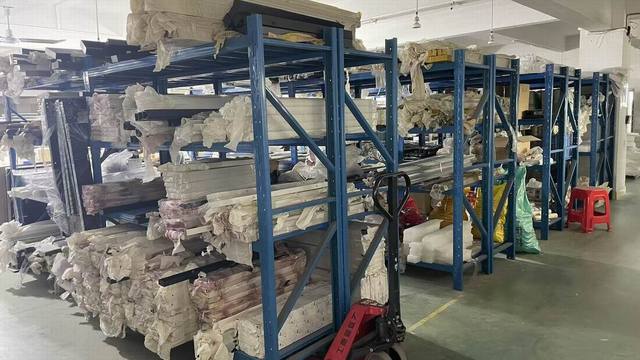
Our location in Dongguan places us within the epicenter of global electronic, plastic, and metal raw supply chains. This localized network allows us to source specialized components—such as high-grade pure copper wire coils, high-permeability silicon steel sheets, and UV-stabilized ABS materials—rapidly and with minimal transport overhead. For global distributors, this supply chain advantage guarantees stable lead times, reduced BOM costs, and rapid scalability for massive seasonal orders.
Aligning production lines with international standards to ensure frictionless importing and cross-border distribution.
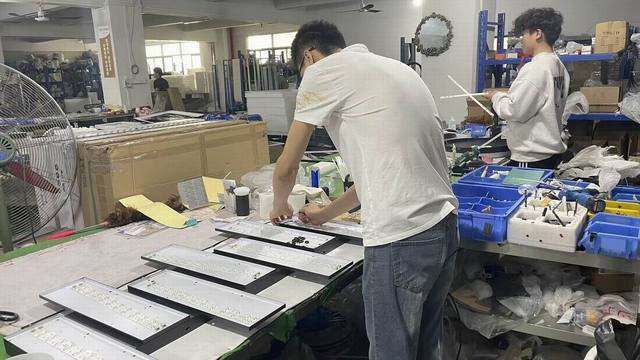
Enterprise buyers, importers, and OEM partners require manufacturing sources that comply with diverse global standards. Dongguan Fanpro Light Co., Ltd. builds international regulatory compliance directly into our initial design frameworks. From electromagnetic compatibility to grounding and mechanical strain tests, every product batch undergoes strict internal verification prior to third-party testing agency submissions.
Compliance features: full UL 507 certification pathways, standard mounting systems, and multi-speed radio frequency (RF) controllers running on FCC-approved spectrums.
Product compliance options: CE, RoHS, CB, and ERP directives ensuring energy efficiency levels conform to European Ecodesign frameworks.
Certified configurations: SAA approved models for Australia and New Zealand, with localized voltage ratings (220V-240V/50Hz) and moisture-resistant finishes for tropical humidity.
Authoritative answers on technology, bulk sourcing, and technical applications of reversible ceiling fans.
Mechanically, the mode changes the directional rotation of the electric motor. In summer mode (counter-clockwise), the blades push air down, creating a direct breeze that cools human skin. In winter mode (clockwise), the blades draw air upward, displacing warm air trapped at the ceiling and circulating it down the walls to homogenize room temperature without generating a direct downward breeze.
BLDC motors utilize solid-state electronic control units (ECUs) to reverse the stator coils' electromagnetic polarity. This eliminates the mechanical switches, heavy heating loads, and brush wear found in AC configurations. Furthermore, BLDC motors consume up to 70% less energy, operate with lower noise (under 20dB), and support 6 or more precision speed steps.
Quality assurance processes include raw copper winding inspections, high-voltage leakage safety testing, computer-controlled dual-plane dynamic rotor balancing (to eliminate wobble), temperature and humidity environmental Chamber simulation, acoustic chamber noise checking, and a mandatory 4-hour continuous run-in aging cycle.
We offer comprehensive OEM/ODM support including customized downrod lengths, bespoke blade designs (wood, ABS, aluminum), integrated LED control PCBs, private brand labeling, custom outer packaging designs matching strict retail drop-test specifications, and customized IoT firmware integrations (Tuya, Alexa, Google Home).
Our specialized smart and industrial air circulators tailored for high-efficiency commercial and residential markets.
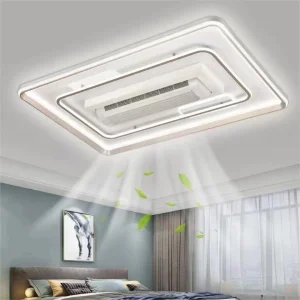
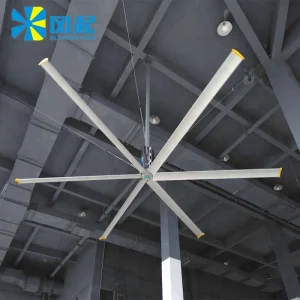
Step inside our testing chambers, showing our commitment to manufacturing precision and structural reliability.
Every prototype design at Dongguan Fanpro Light Co., Ltd. is subjected to stress testing simulations in our dedicated validation department. Mechanical longevity is confirmed using heavy-duty testing equipment designed to simulate 10 years of operations. Additionally, wind tunnels evaluate the real-world cubic feet per minute (CFM) output of various blade models, ensuring that our products meet the precise efficiency metrics requested by enterprise HVAC designers.
 Fanpro Light