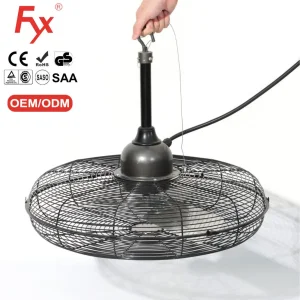
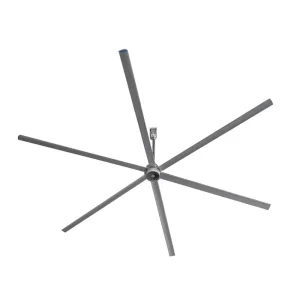
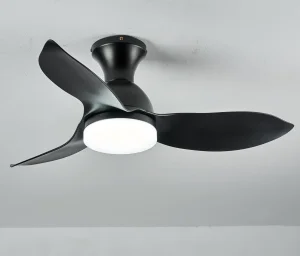
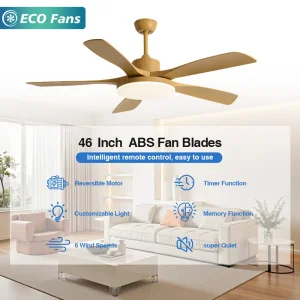
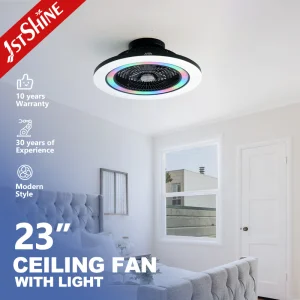
Explore our premium selection of dynamic energy-saving ceiling fans designed for residential comfort and heavy-duty industrial airflow.
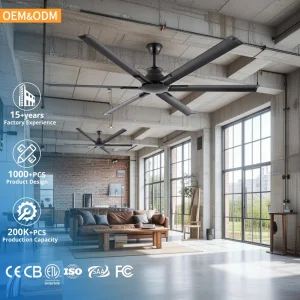
Understanding the engineering mechanics behind bidirectional airflow optimization.
In modern HVAC and industrial architecture, ceiling fans with reversible motors represent a foundational shift toward dynamic thermal management. Unlike standard unidirectional air movers, a reversible fan alters the physical direction of its rotation to leverage distinct fluid-dynamical phenomena. In the summer (downdraft mode), the blades spin counter-clockwise, pushing columnized air downward. This induces a localized evaporative cooling effect (the wind-chill factor), reducing perceived ambient temperatures by up to 4°C without actual refrigeration. In the winter (updraft mode), the rotation is reversed to clockwise, drawing cooler floor air upwards and displacing warmer air gathered at the ceiling. This process, known as thermal destratification, normalizes temperature layers and reduces active load on primary heating units by 15% to 30%.
Hot air naturally migrates upwards because it is less dense than cool air (approximately 1.2 kg/m³ at 20°C vs. 1.29 kg/m³ at 0°C). In spaces with tall ceilings, such as logistics centers or open-plan residential homes, a temperature gradient of up to 1°C per meter is common. Reversible motors operating at low speeds in updraft mode create a gentle vacuum that pulls heavy, cool air upward, which in turn pushes the warmer air down along the walls. By using a low rotational frequency, this configuration avoids creating a draft that would chill occupants, thereby retaining thermal energy within the living zone.
Field-Oriented Control drivers monitor current inputs continuously to guarantee silent motor transitions, avoiding mechanical stress during reversal phases.
Brushless Direct Current technology cuts power consumption by up to 70% compared to traditional AC induction motors, running cooler and lasting longer.
Reversible DC motors feature custom lubrication routes and dual-sealed ball bearings, engineered to manage axial loads in both rotational directions.
Pioneering smart ceiling fan engineering, high-efficiency motor development, and global OEM/ODM partnerships.
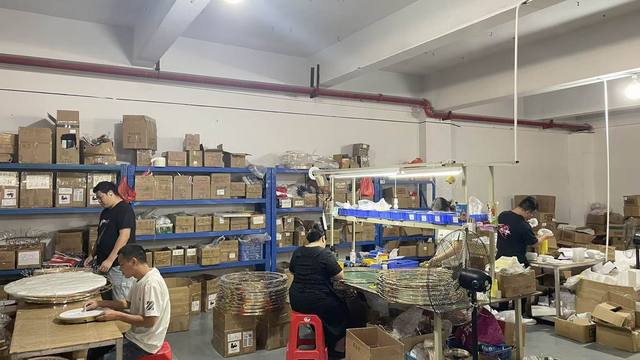
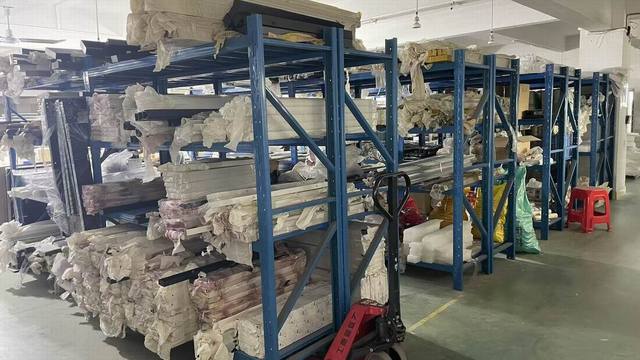
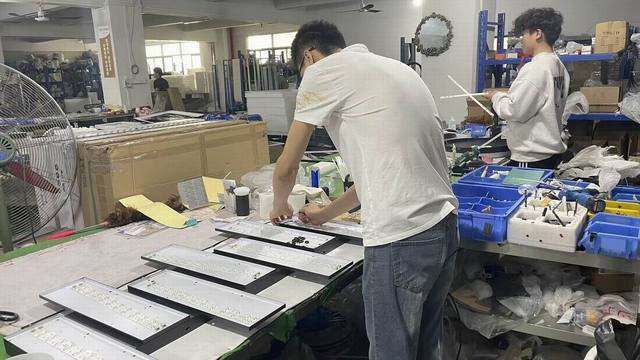
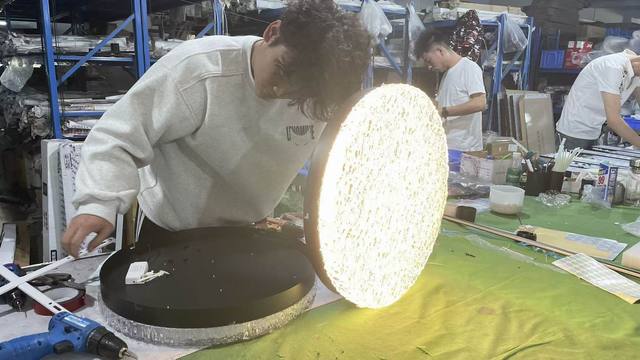
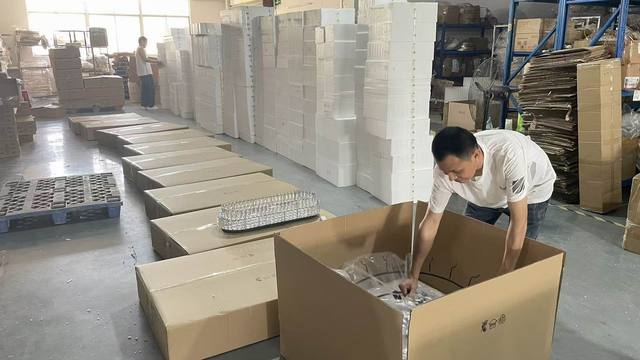
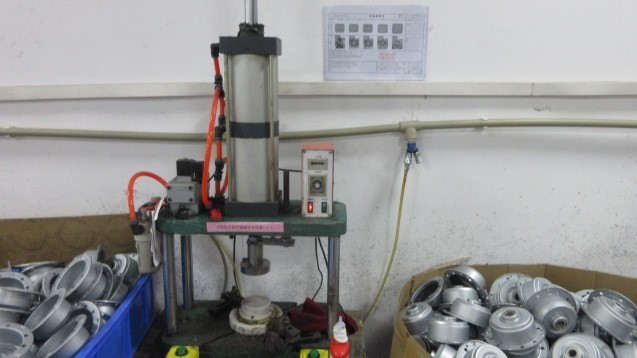
Established in 2012 and based in Dongguan, Guangdong—a globally recognized industrial manufacturing hub—Dongguan Fanpro Light Co., Ltd. is a leading manufacturer specializing in smart ceiling fans, DC motor ceiling fans, and energy-efficient air circulation systems. Spanning a modern production facility of more than 12,000 square meters and powered by over 180 skilled professionals, the company integrates design, structural engineering, precision motor manufacturing, rigorous QA, and international sales under one roof. Our operation features specialized assembly lines, dynamic balance testing suites, and aging laboratories to ensure all units perform reliably and meet international safety standards.
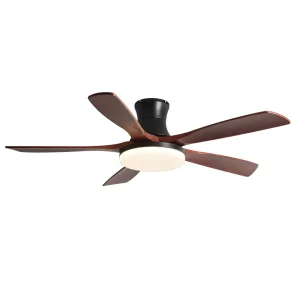
Fanpro Light offers a comprehensive product lineup, including smart WiFi ceiling fans, high-efficiency DC motor models, integrated dimmable LED ceiling fans, low-profile and hugger fans, outdoor-rated solutions, and large-scale commercial air movement systems. Through consistent R&D investments in motor technology, smart control integration, and aerodynamics, we continue to deliver robust solutions for our global OEM and ODM partners across North America, Europe, Australia, Southeast Asia, and the Middle East.
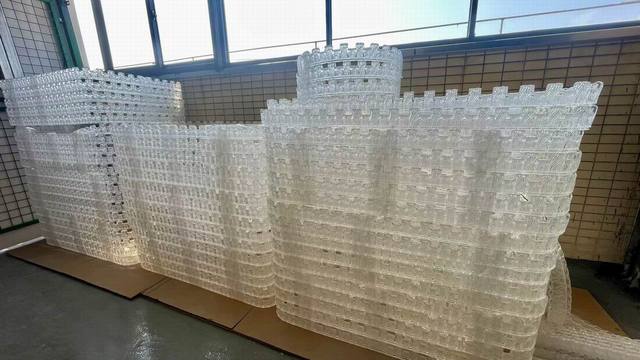
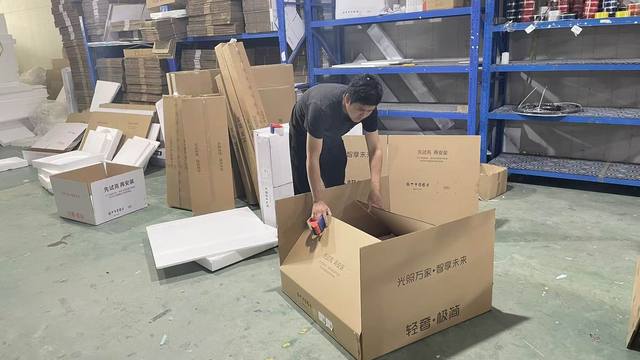
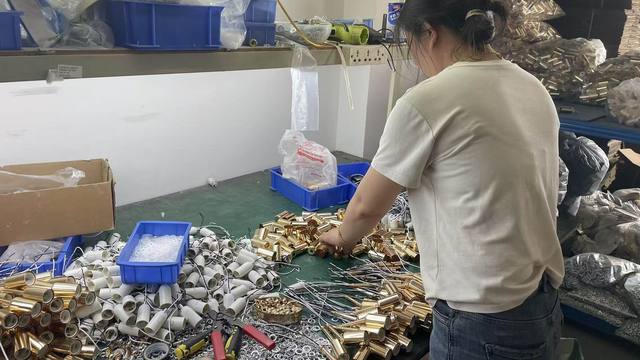
A comparative evaluation of ceiling fan motor technologies, structural features, and efficiency performance.
Selecting the right ventilation system requires a clear understanding of the mechanical differences between standard AC motors, Brushless DC (BLDC) motors, and Permanent Magnet Synchronous Motors (PMSM). While AC motors are simple and cost-effective, they struggle with heat management and lack precise variable speed control. BLDC and PMSM motors represent the modern standard for energy efficiency and operational control. These motors utilize high-energy permanent magnets (typically Neodymium Iron Boron, NdFeB) to establish a constant rotor magnetic field, eliminating the rotor copper losses common in AC induction motors.
| Engineering Attribute | Traditional AC Motors | Brushless DC Motors (BLDC) | Permanent Magnet Synchronous (PMSM) |
|---|---|---|---|
| Drive Control Method | Direct Voltage Induction / Phase control | Electronic Commutation (Square/Sine Wave) | Field-Oriented Control (FOC Sine Wave) |
| Operational Energy Efficiency | Low (30% - 40% efficiency) | High (80% - 85% efficiency) | Ultra-High (88% - 93% efficiency) |
| Rotational Speed Range | Limited (typically 3 fixed speeds) | Wide (stepless, 6 standard levels) | Precise control (stepless adjustments) |
| Mechanical Noise Signature | Moderate (50-60 dB hum) | Very Low (<35 dB at standard speeds) | Silent (<30 dB due to FOC drive) |
| Bidirectional Transition Speed | Slow (requires manual toggle/idle pause) | Fast (automated soft deceleration & restart) | Immediate (integrated sensorless vector control) |
| Lifecycle Maintenance Costs | Moderate (brush wear & heat degradation) | Minimal (sealed bearing systems) | Maintenance-free (industrial grade seals) |
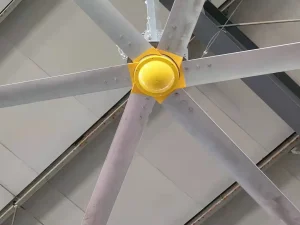
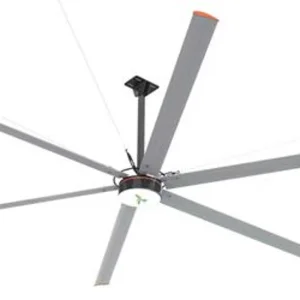
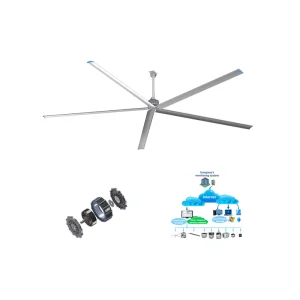
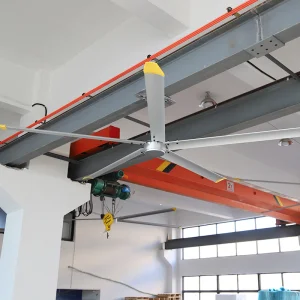
For commercial facilities, warehouses, and open office layouts, PMSM-driven HVLS (High Volume Low Speed) fans provide high performance. The direct-drive design replaces complex gearboxes, removing oil leak hazards, reducing system weight, and delivering high torque at low operational speeds.
How variable-direction ceiling fans are applied across different climates and architectural styles.
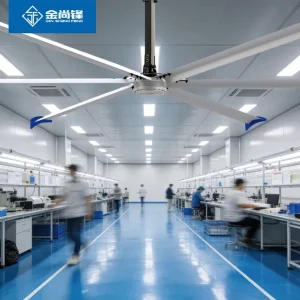
Large-span HVLS fans maintain stable indoor climates in distribution centers, protecting goods from moisture buildup and optimizing working conditions for staff.
Low-profile, smart-controlled fans integrate easily into offices, retail spaces, and restaurants, balancing ambient air distribution silently.
IP-rated, wet-certified ceiling fans with solid wood or composite blades resist moisture, salt air, and corrosion in coastal settings and open patios.
In high-latitude countries (such as Northern Europe and the Northern United States), winter heating accounts for a major portion of building energy budgets. Warehouses with 12-meter ceilings routinely accumulate high-temperature air pockets near the roof. Running a reversible HVLS fan in **updraft mode** pushes this warm air back down to the floor without creating a direct draft on workers. In tropical regions (such as Southeast Asia and Australia), ceiling fans with reversible motors provide continuous cooling, operating alongside air conditioning systems to lower total energy costs.
How the industrial concentration in Guangdong ensures stable production, premium material sourcing, and efficient export logistics.
The success of global sourcing relies on **supply chain depth, speed, and consistency**. Dongguan Fanpro Light Co., Ltd. benefits from its location in the Pearl River Delta industrial cluster, which provides access to key manufacturing resources. From raw steel sourcing and precision copper winding to advanced surface treatment and electronic components, we maintain strict quality control at every stage of production.
We source high-grade electrical steel (silicon steel) for motor laminations to reduce magnetic hysteresis losses. Our copper windings use double-insulated, heat-resistant magnet wire to prevent electrical shorts.
Every blade set is matched by weight and dynamically balanced on specialized test equipment. This ensures wobble-free operation and reduces wear on bearings and motors.
For outdoor and damp-rated products, components undergo salt-spray testing, UV exposure validation, and water ingress testing to meet IP-rating guidelines.
Additionally, our proximity to major shipping hubs like Shenzhen and Guangzhou helps simplify container booking and customs clearance, ensuring reliable delivery timelines for distributors, developers, and retailers worldwide.
Meeting international safety requirements and providing compatibility with modern IoT networks.
Entering international consumer and commercial markets requires compliance with safety, environmental, and electromagnetic standards. Our manufacturing facilities maintain certified quality control systems. Our products are built to meet the certification requirements of key global target markets:
We configure our smart ceiling fans to integrate with existing building automation and residential IoT systems. By supporting Tuya, Matter, Zigbee, and Wi-Fi protocols, our fans can connect directly with Amazon Alexa, Google Assistant, and Apple HomeKit. This allows users to coordinate fan speeds and rotation directions automatically based on room occupancy, ambient temperature, and humidity sensors.
Answers to technical and commercial questions regarding reversible ceiling fans.
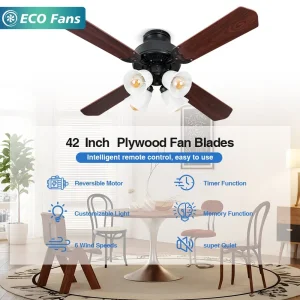
Reversible motors allow you to change the direction of airflow depending on the season. In summer, the fan runs counter-clockwise to create a cooling breeze. In winter, it runs clockwise at a low speed to push warm air trapped at the ceiling back down to the floor, helping to lower heating costs.
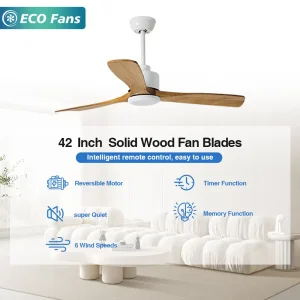
DC motors are up to 70% more energy-efficient than AC motors, run more quietly (often below 35 dB), and support a wider range of speeds (typically 6 speeds vs. 3 for AC). They also allow you to change the motor direction easily via remote control rather than a physical switch on the fan body.
We offer customization for blade materials (such as solid paulownia wood, ABS, and aluminum), blade span, motor housings, LED light integrations, control boards (supporting WiFi, Zigbee, or RF), custom packaging, and brand labeling.
We use specialized balancing scales to match fan blades by weight before packaging. Each fan motor also undergoes dynamic balancing tests on our assembly lines to minimize wobble and reduce mechanical stress during operation.
Yes, we manufacture fans rated for both damp and wet locations. These models feature sealed, rust-resistant motor housings, moisture-resistant wiring, and synthetic ABS or treated solid-wood blades that stand up to outdoor humidity.
For standard OEM orders, our production lead time ranges from 35 to 45 days. This timeline can vary depending on order volume and the level of customization required, especially for custom-molded parts or unique finishes.
Yes, our smart models are compatible with Tuya-based IoT platforms, allowing them to integrate with Amazon Alexa, Google Home, and Apple HomeKit. We also support customization for Zigbee and Matter-compatible controllers.
Our products are certified to meet major international standards. Depending on the model, we provide CE, RoHS, ETL, SAA, and KC certifications, ensuring compliance with local electrical safety regulations.
Review our range of heavy-duty commercial fans, low-profile decorative models, and smart-sensor air circulation systems.
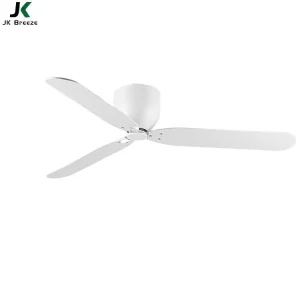
 Fanpro Light