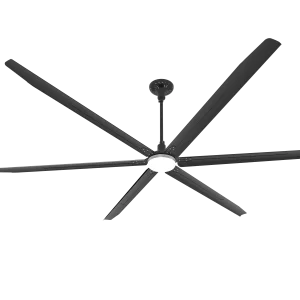
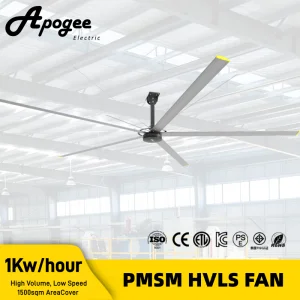
Highly optimized High Volume Low Speed (HVLS) configurations built to secure energy compliance and thermal reliability across Kansai industrial hubs.
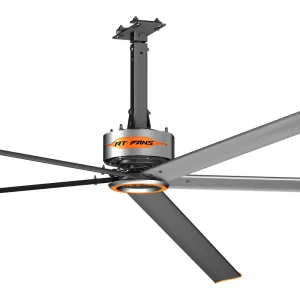
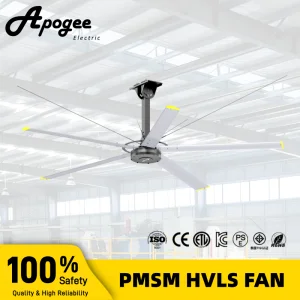
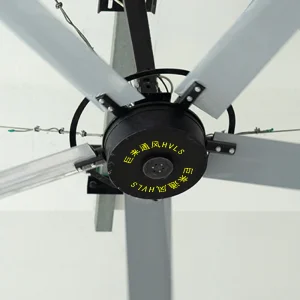
The Kansai Industrial Region—anchored by Osaka's heavy manufacturing clusters, logistics centers along Osaka Port, and manufacturing bases in Higashiosaka—stands at a critical crossroads. Under Japan's 2050 Carbon Neutrality Goal and the recently revised Energy Conservation Act (省エネ法), industrial operators are under intense pressure to minimize electrical consumption while maintaining safe working conditions.
Summers in Osaka are notoriously hot and humid, with temperatures regularly exceeding 35°C and relative humidity levels climbing above 80%. These conditions create extreme thermal stress inside massive, unconditioned steel-framed warehouses and manufacturing plants. Standard air conditioning (HVAC) systems are prohibitively expensive to run in these large spaces, often leading to astronomical energy bills and poor performance due to heat stratification.
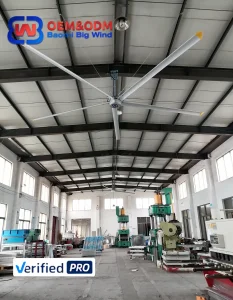
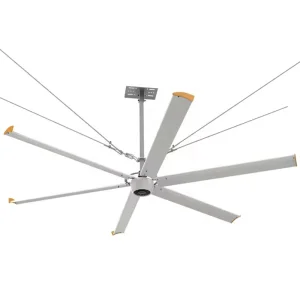
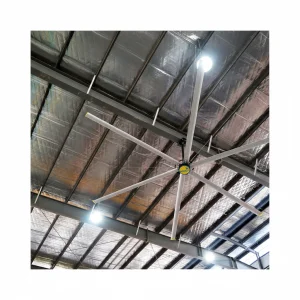
By installing High Volume Low Speed (HVLS) fans, factories can achieve structural cooling and air destratification. Generating a gentle, steady breeze, these massive systems lower perceived room temperatures by up to 5°C to 8°C through optimized evaporative cooling, significantly cutting the carbon footprint of factory cooling systems.
Thermal stratification occurs when warm air naturally rises toward the high ceiling ceilings of industrial spaces while cold air sinks to the floor level. In Osaka's logistics warehouses—where roof heights often exceed 10 to 12 meters—this thermal gap can span up to 15°C between floor and ceiling.
HVLS fans continuously push massive columns of air down from the ceiling to the floor, where it spreads out horizontally in all directions. This creates a homogeneous thermal state, reducing air stratification and optimizing HVAC efficiency. During cooler months, this mechanism recirculates trapped warm air down to the working zones, delivering substantial winter energy savings.
The technological leap in HVLS engineering centers on motor topology. Modern industrial designers are shifting from traditional induction geared systems to PMSM technology.
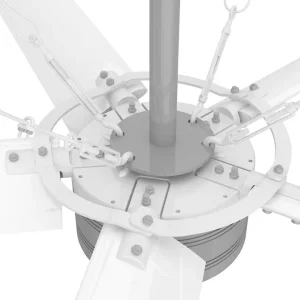
Permanent Magnet Synchronous Motors (PMSM) use rare-earth neodymium magnets, completely bypassing the need for a mechanical reduction gearbox. This results in zero gear-friction loss, boosting motor efficiency up to 92-95%. Without oil seals, PMSM systems prevent oil leakage hazards in clean production zones.
Industrial installations in urban Osaka are bound by strict noise control regulations. The elimination of gear-contact noise drops operating sound levels down to <38-42 dBA. This represents a 15 dBA reduction compared to traditional geared fans, making them highly suitable for mixed-use or low-ceiling environments.
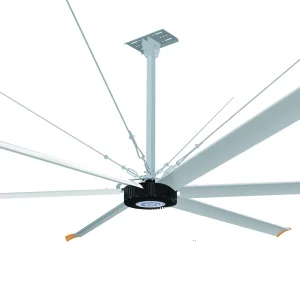
Constructed from aviation-grade 6063-T6 aluminum alloy, our high-lift airfoil blades feature a unique continuous curvature. This aerodynamic shape creates maximum air volume while minimizing turbulence-induced drag, lowering energy requirements during continuous operation.
| Engineering Metrics | Standard Geared Induction Fans | Direct-Drive PMSM Systems |
|---|---|---|
| Power Efficiency | 75% - 82% (System-level loss via gear interface) | 92% - 96% (Direct electromagnetic transmission) |
| Noise Emissions | 55 dBA - 62 dBA at max output | < 40 dBA (Near-silent performance) |
| Maintenance Cycle | Annual lubrication checks, shaft alignment, seal replacement | Zero Maintenance (Sealed direct-drive motor assembly) |
| Startup Torque Control | Mechanical shock load on gear teeth | Smooth ramp-up via integrated VFD vector control |
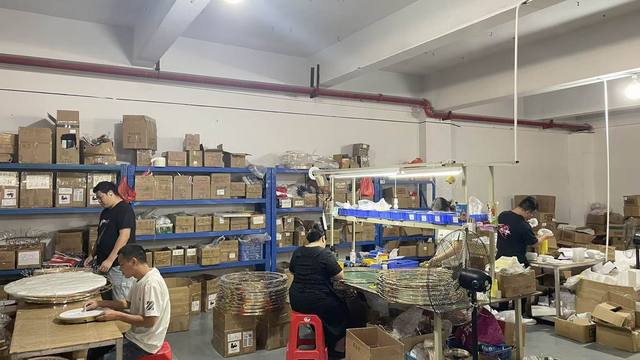
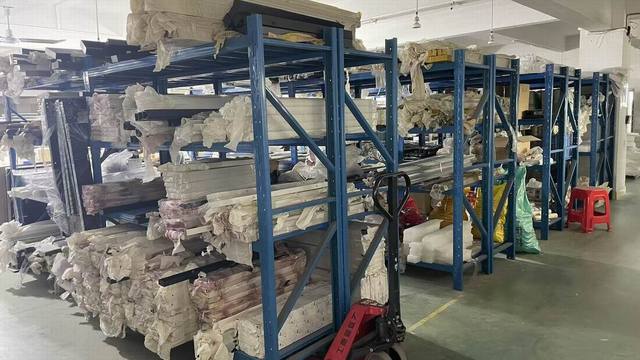
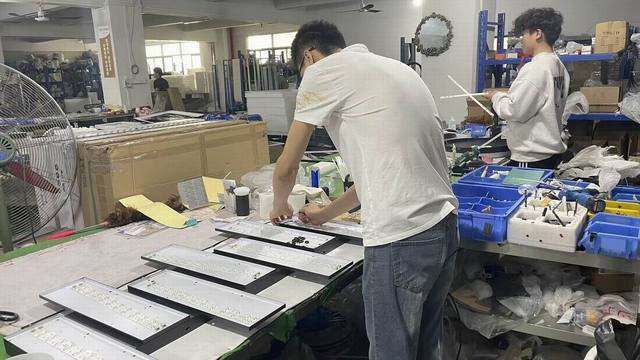
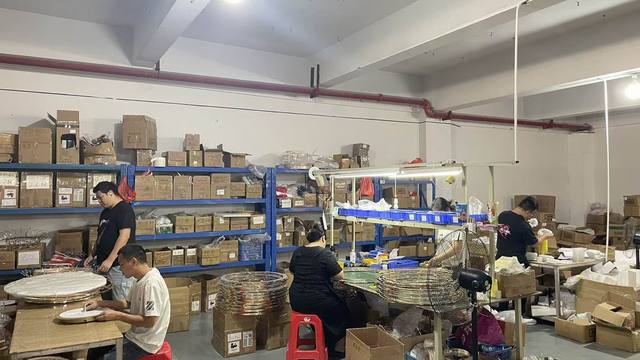
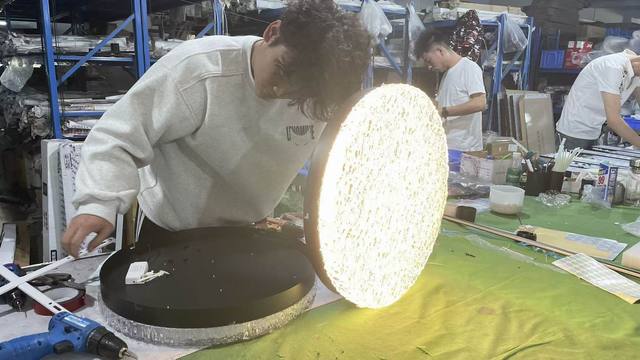
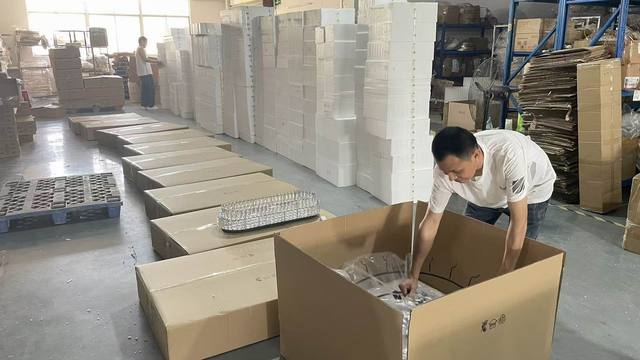
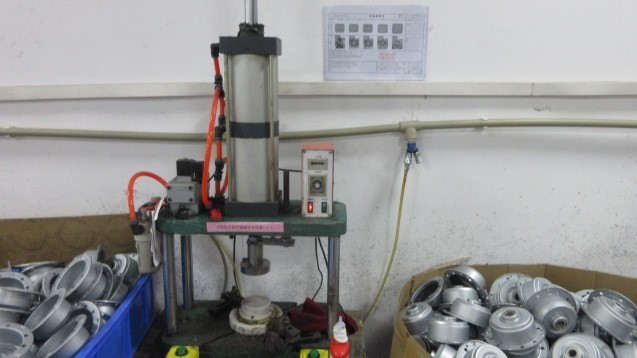
Backing our regional installation systems in Osaka is the advanced manufacturing facility of Dongguan Fanpro Light Co., Ltd., delivering quality-assured OEM and ODM solutions.
Dongguan Fanpro Light Co., Ltd. is a professional ceiling fan manufacturer specializing in the design, development, and production of smart ceiling fans, DC motor ceiling fans, and energy-efficient air circulation solutions for residential, commercial, and hospitality applications. Established in 2012, the company is located in Dongguan, Guangdong, one of China's leading manufacturing hubs, providing convenient access to global logistics networks and supply chains.
With a modern production facility covering more than 12,000 square meters and a workforce of over 180 skilled employees, Fanpro Light integrates product design, engineering, manufacturing, quality control, and international sales under one roof. The company operates multiple assembly lines and testing laboratories to ensure consistent product performance, durability, safety, and compliance with international standards.
Fanpro Light offers a comprehensive range of ceiling fan solutions, including smart WiFi ceiling fans, DC motor ceiling fans, ceiling fans with LED lighting, low-profile ceiling fans, decorative ceiling fans, outdoor ceiling fans, and commercial air movement systems. The company continuously invests in motor technology, energy-saving innovations, and intelligent control systems to meet evolving market demands.
As an experienced OEM and ODM manufacturing partner, Fanpro Light supports customers worldwide with customized designs, private labeling, packaging solutions, and product development services. Its products are exported to North America, Europe, Australia, Southeast Asia, the Middle East, and other international markets.
Committed to quality, innovation, and long-term partnerships, Dongguan Fanpro Light Co., Ltd. strives to provide reliable ceiling fan products and flexible manufacturing solutions that help customers strengthen their competitiveness in the global marketplace.
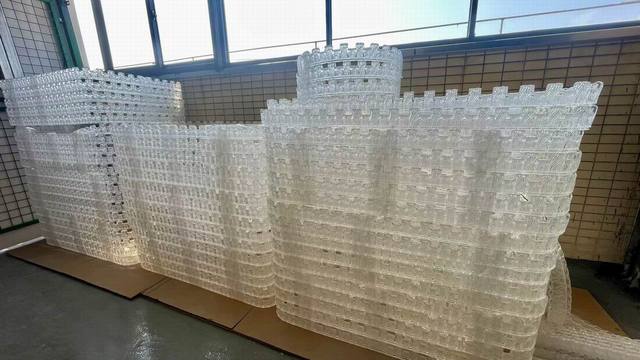
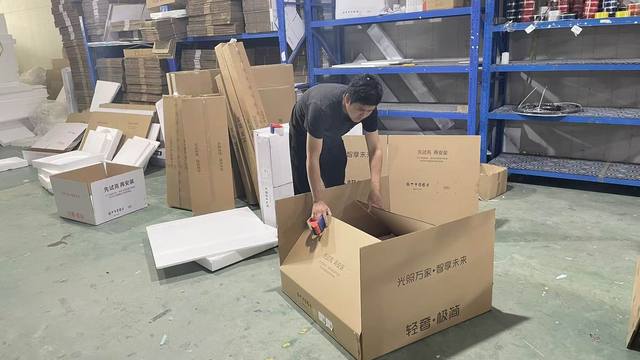
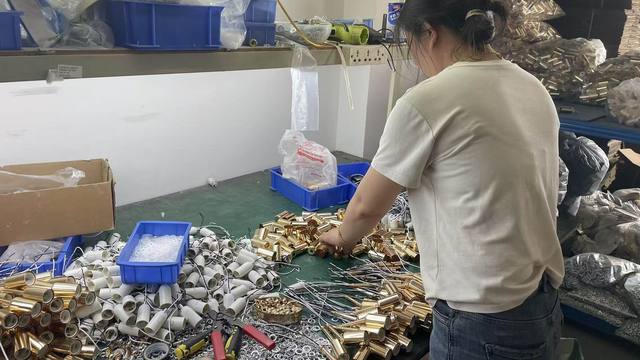
Every industrial vertical has distinct requirements. We tailor custom solutions to resolve environmental and thermal issues across key sectors.
In the humid coastal logistics nodes of the Osaka Bay Area, condensation on cardboard packaging and concrete floors (known as sweating slab syndrome) poses a major safety and quality risk. By maintaining continuous, low-velocity air circulation, our HVLS fans stabilize the dew point temperature, preventing moisture from settling on packaging materials and warehouse floors.
In metalworking, casting, and assembly facilities across Higashiosaka, localized radiant heat from machinery can create unsafe working conditions. Standard high-speed fans can disrupt welding shielding gases and kick up dust. Our HVLS units circulate massive columns of air at a gentle velocity, providing effective evaporative cooling without affecting delicate manufacturing processes.
For modern commercial properties, transportation hubs, and exhibition centers like Intex Osaka, indoor environmental quality directly impacts visitor comfort. Working alongside existing air conditioning, our low-noise PMSM fans distribute cool air evenly throughout the space, eliminating hot spots and significantly reducing seasonal utility expenses.
Japan's building standards regulations (建築基準法) demand strict safety measures for any suspended equipment. Because HVLS fans feature heavy drive assemblies and long rotor spans, installations in the Kansai area must be engineered to withstand seismic events without risk of structural failure.
Our safety framework meets and exceeds these local compliance requirements:
Importing and installing electrical machinery in Japan requires strict adherence to localized safety certifications. Commercial equipment must comply with the Product Safety Electrical Appliance & Material Law (PSE).
Our partner manufacturing processes and electrical configurations conform to PSE compliance guidelines. This includes extensive insulation resistance checks, high-voltage tolerance tests, and electromagnetic interference (EMI) filtering. This guarantees that each installed system operates safely within the Japanese voltage grid (200V three-phase or 100V single-phase systems at 60Hz in Western Japan/Osaka).
As modern logistics and manufacturing plants transition into automated "smart factories," air circulation systems must integrate into broader building management software.
Equipped with integrated temperature and relative humidity sensors, these systems dynamically adjust fan speeds based on real-time heat index calculations, maximizing comfort and energy efficiency.
Full compatibility with standard building management systems (BMS) allows maintenance managers to monitor energy consumption, control operating speeds, and track performance from a centralized system.
Onboard vibration monitors utilize smart analysis algorithms to detect minor alignment shifts or bearing wear early, warning operations staff before mechanical issues develop.
Next-generation carbon-fiber composites reduce blade weight by 25%, lowering starting inertia requirements and energy consumption while maintaining high structural strength.
Detailed answers to common technical queries from facility engineers, procurement managers, and plant directors in Osaka.
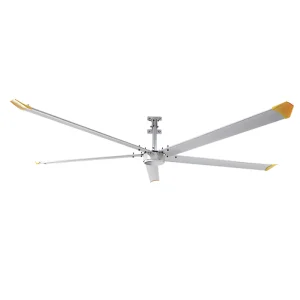
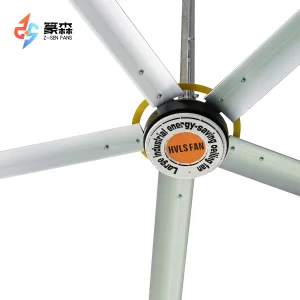
Explore our full line of industrial and commercial HVLS fans, engineered for high reliability, quiet operation, and optimal air distribution.
 Fanpro Light