Fanpro Light
Seattle Market: Industrial & Commercial Air Circulation Dynamics
The Pacific Northwest (PNW), centered around the Seattle-Tacoma-Bellevue metropolitan area, represents one of the most dynamic and environmentally progressive architectural landscapes in North America. Unlike regions with extreme, sustained temperature peaks, Seattle features a unique temperate maritime climate characterized by mild, dry summers and cool, wet winters. This distinct microclimate has given rise to building designs that prioritize passive cooling, energy recovery, and optimized mechanical air distribution. In this environment, modern indoor ceiling fans are no longer considered simple comfort-enhancing fixtures; they are critical components of high-efficiency building Management Systems (BMS) and mechanical ventilation systems.
Historically, commercial buildings in Seattle operated without heavy mechanical air conditioning. However, modern urbanization, increased glass-to-wall ratios in commercial mid-rises, and rising summer temperatures have made thermal control a significant challenge. Incorporating energy-efficient ceiling fans allows local designers to leverage the "cooling effect" of air movement. This design strategy lowers the perceived room temperature by up to 4°F (2.2°C), enabling facility managers to set thermostat points higher without sacrificing occupant comfort.
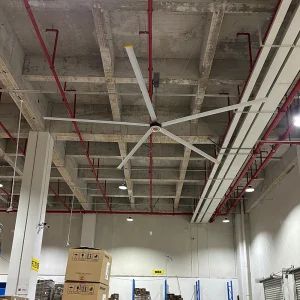
On the industrial front, the logistical and aerospace corridors extending from Everett down to Kent, Renton, and Tacoma require vast warehouse spaces. In these high-ceiling environments, the primary thermodynamic challenge is thermal stratification—a physical phenomenon where warm air naturally rises to the roofline while cooler air settles on the floor. In cold Seattle winters, this results in significant energy loss as heating systems work to maintain temperatures at floor level. By introducing High-Volume Low-Speed (HVLS) and commercial-grade ceiling fans, industrial operations can effectively destratify the air column, pushing trapped heat down to the working zone. This approach reduces overall heating energy consumption by 20% to 30%, which directly aligns with the strict requirements of the Seattle Energy Code (SEC).
Global Enterprise Procurement Requirements
For global sourcing managers, developers, and MEP (Mechanical, Electrical, Plumbing) engineering consultants, procurement is defined by supply chain security, cost predictability, and technical compliance. The process of importing commercial-grade HVAC and air-movement equipment into North American markets involves rigorous vetting of manufacturing facilities.
Global procurement directors look for partners capable of handling high-volume OEM/ODM projects while maintaining strict quality control. Essential capabilities include:
- Motor Durability and Design: A shift away from traditional AC motors toward Brushless Direct Current (BLDC) motors, which offer up to 70% energy savings, lower operating temperatures, and longer life cycles.
- Acoustic Performance: Precise noise mitigation, measured in Sones or Decibels (dB). In commercial environments like open-plan tech offices in South Lake Union, fans must run at high speed while keeping noise levels below 35 dB to prevent disruption.
- Integrated Control Options: Compatibility with standard building automation protocols, including BACnet, Modbus, and smart consumer frameworks like Tuya, Alexa, and Google Home.
- Material Resilience: Ability to withstand high humidity and salt-air exposure, which is particularly relevant in coastal areas like Seattle. Specifiers require corrosion-resistant coatings, ABS-molded blades, and sealed bearing assemblies.
Macro-Industry Air Circulation Solutions
Air circulation is a key factor in commercial HVAC design. The ASHRAE Standard 55 (Thermal Environmental Conditions for Human Occupancy) emphasizes air speed as a viable method for maintaining thermal comfort. In high-density settings, proper air circulation helps prevent air stagnation, reduces concentrations of airborne pathogens, and lowers relative humidity, which in turn reduces the risk of mold growth in wet climates like the Pacific Northwest.
Modern commercial ventilation relies on two main configurations:
1. High-Volume Low-Speed (HVLS) Systems
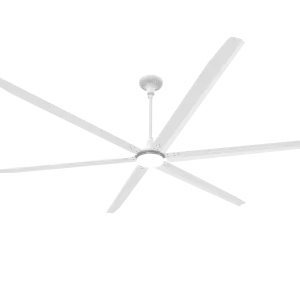
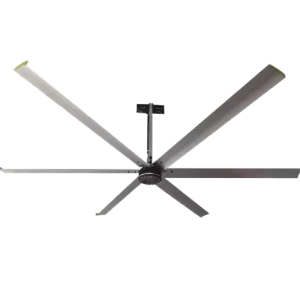
Engineered for open spaces with ceilings higher than 15 feet, HVLS fans utilize large diameters (ranging from 8 to 24 feet) to move large volumes of air at low rotational speeds. This creates a gentle, continuous breeze that cools occupants through natural evaporation without causing draft-related discomfort or dispersing dust and light debris.
2. Distributed Low-Profile Smart Ceiling Fans
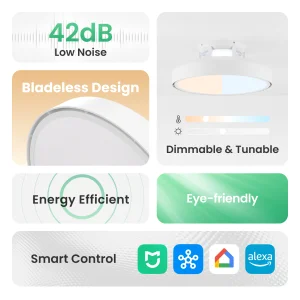
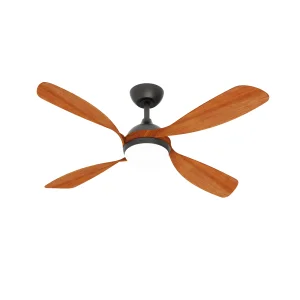
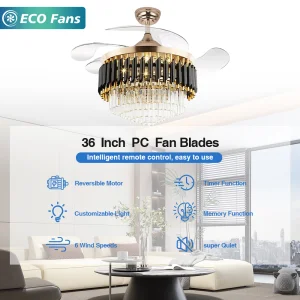
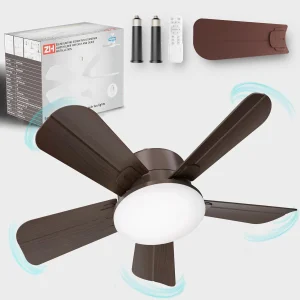
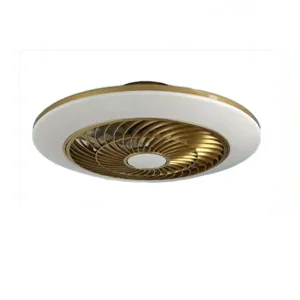
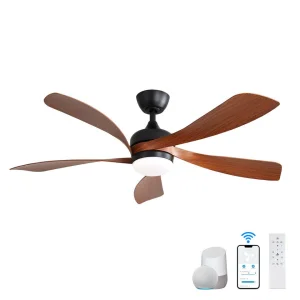
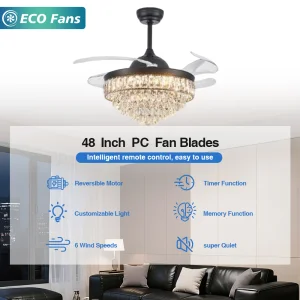
Typically used in residential spaces, hospitality guest rooms, and individual offices. These fans utilize high-efficiency DC motors and integrated LED arrays to provide localized air movement. When synchronized via smart home protocols, they dynamically adjust their speeds based on ambient temperature and occupancy data.
| Technology Parameter | Traditional AC Motor Fans | Next-Gen DC Motor Fans (BLDC) | HVLS Industrial Fans |
|---|---|---|---|
| Energy Efficiency | Standard (30-80W draw) | Ultra-High (5-35W draw) | High (0.5 - 1.5kW for massive spaces) |
| Operational Decibel Range | 40 - 55 dB (Audible hum) | 15 - 35 dB (Whisper quiet) | 45 - 60 dB (Low frequency) |
| Speed Customization | 3 Fixed Speeds | 6 Speeds to Stepless Variation | Variable Speed via VFD Controllers |
| Smart BMS Integration | Rarely Compatible | Standard (WiFi, Tuya, RS485) | Standard (Modbus, BACnet, Analog 0-10V) |
| Average Lifespan | 5,000 - 8,000 Hours | 20,000+ Hours (Brushless) | 50,000+ Hours (Industrial Grade) |
Technical Roadmap & Future Outlook
The indoor air movement sector is undergoing a significant shift driven by advancements in aerodynamics, materials science, and IoT integration. Manufacturers are investing heavily in research and development to align with global net-zero carbon targets and smart-city initiatives.
Key technical trends shaping the industry include:
- Bio-Mimetic Aerodynamic Blades: Designers are looking to natural structures, such as whale fins and bird wings, to create blade profiles that reduce drag and tip vortex generation. This approach increases airflow efficiency while reducing noise.
- Advanced BLDC Motor Drives: Utilizing sine-wave vector control technology to ensure smooth, vibration-free motor operation across all speed levels.
- Integrated Multi-Sensor Platforms: Integrating relative humidity, CO2, and temperature sensors directly into fan housings. This allows the fan to operate as an active node within the building's ventilation system, adjusting speed dynamically based on air quality metrics.
- Eco-Friendly Composite Materials: Transitioning away from resource-intensive metals and non-recyclable plastics toward sustainably sourced timber, recycled aluminum, and biodegradable carbon-fiber composites.
Localized Support & Compliance Assurance
Entering the Seattle market and the broader US Pacific Northwest requires strict adherence to local regulatory frameworks. Electrical safety, structural integrity, and energy consumption standards must be verified by accredited third-party laboratories.
Important compliance considerations include:
- UL 507 & CSA C22.2 No. 113: The primary safety standards for electric fans in North America, covering electrical insulation, flame resistance of plastic enclosures, and mechanical safety shields.
- ETL / OSHA Nationally Recognized Testing Laboratory (NRTL) Certification: Crucial for passing building inspections during commercial renovations and new construction projects.
- Seismic Bracing Compliance: The Puget Sound area is situated in a seismically active zone (Design Category D through F). Suspension systems for commercial ceiling fans must be engineered to resist lateral forces, typically requiring secondary safety cables secured directly to the building's structural framework.
- Energy Star Certification: Required to qualify for local utility rebate programs, such as those offered by Seattle City Light and Puget Sound Energy (PSE), which encourage the adoption of high-efficiency DC motor systems.