Production Facility (SQM)
Skilled Assembly & QA Experts
Established Engineering History
OEM/ODM Customization Capacity
Engineered for high-volume airflow, ultimate thermal management, and reliable industrial performance
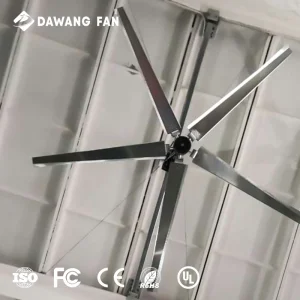
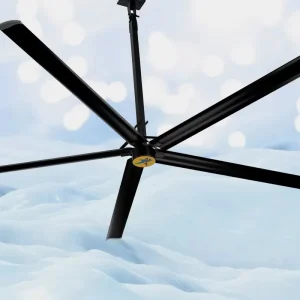
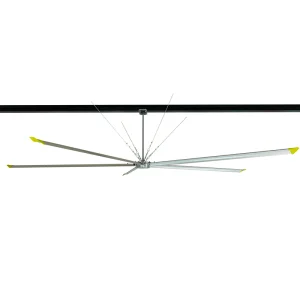
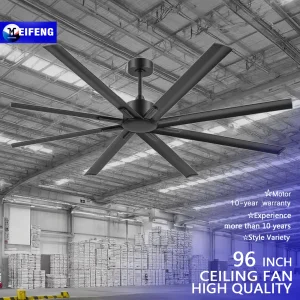
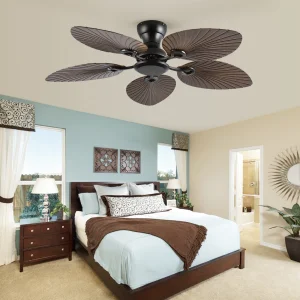
A technical guide on HVAC optimization, low-profile structures, and supply-chain efficiency
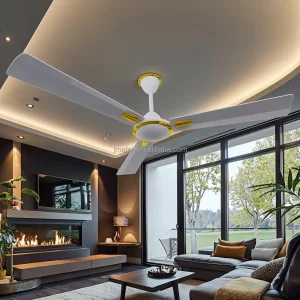
As modern architecture trends lean toward optimization of vertical space, commercial and residential structures are presenting lower ceiling clearances. Standard drop-rod ceiling fans, while effective in towering warehouses, pose safety risks and aesthetic mismatches in spatial designs with limited overhead space. This has driven a monumental shift toward flush mount ceiling fans (also known as low-profile or hugger ceiling fans). These units mount directly against the ceiling deck, minimizing vertical footings while maximizing the boundary layer airflow displacement. For global distributors, commercial project managers, and HVAC suppliers, partnering with specialized OEM/ODM flush mount ceiling fan factories has transitioned from a basic procurement choice to a vital strategic asset.
Understanding user intent and technical necessity in this category requires looking closely at modern construction projects. From mid-rise commercial offices and underground parking structures to industrial chemical plants and smart homes, low-profile fans solve structural challenges. By eliminating the downrod, engineering teams must overcome physical restrictions regarding air intake. In a traditional fan, air is drawn freely from the space above the blades. Flush mount fans, however, operate in close proximity to the ceiling, creating an airflow restriction zone. Consequently, specialized blade pitch, advanced aerodynamic styling, and high-efficiency motor engineering are needed to maintain premium air circulation without causing excessive noise or motor strain.
E-E-A-T Expert Observation: True low-profile efficiency is not simply about shortening a downrod. It requires a complete redesign of the blade aerodynamics and intake clearances to circumvent the "ceiling boundary layer effect" which typically chokes standard blade configurations.
The manufacturing blueprint of a high-performance low-profile ceiling fan is rooted in advanced motor mechanics and material science. Within our production lines at Dongguan Fanpro Light Co., Ltd., we focus on three main pillars of technical optimization:
A. Advanced Motor Topologies (AC, BLDC, and PMSM): Traditional AC motors are steadily being replaced by brushless direct current (BLDC) motors and Permanent Magnet Synchronous Motors (PMSM). BLDC and PMSM technologies offer up to 70% energy savings compared to conventional motors. Additionally, their heat dissipation profile is exceptionally low, extending the lifespan of the bearings and windings—a critical factor for industrial installations, such as chemical plants or warehouses, where operation runs 24/7. The integration of two ball bearing configurations ensures stable operation and reduces structural resonance, keeping noise levels under 35dB.
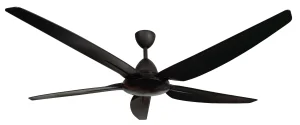
B. Aerodynamic Blades & Composite Engineering: When designing for flush mount applications, blade geometry determines output. Whether using high-impact ABS, precision-machined aluminum alloys, or premium engineered wood, the angle of attack must be optimized. In narrow spaces, a variable-pitch blade design is utilized—where the pitch is steeper near the hub and shallower at the tips. This ensures uniform velocity distribution along the blade span and prevents the recirculation of stagnant air near the ceiling deck.
C. Smart Integration & Building Management Systems (BMS): The modern commercial and industrial landscape demands automated integration. OEM/ODM designs today incorporate smart Wi-Fi controllers, IoT sensors, and Tuya/SmartLife modules. These technologies allow flush mount ceiling fans to communicate with building HVAC systems, dynamically adjusting speed based on local temperature gradients and occupancy, which greatly reduces overall HVAC loads.
Complete product customization including specialized PCB controller programming, dynamic balancing, and structural load simulation for zero-vibration mounting.
All items comply with strict international regulatory frameworks, certified under UL, CE, SAA, RoHS, and FCC protocols for commercial deployments.
Strategic localization in Dongguan, Guangdong, offering seamless integration with raw material suppliers and global deepwater shipping terminals.
A trusted global manufacturing partner for commercial-grade air circulation systems
Established in 2012, Dongguan Fanpro Light Co., Ltd. is a professional ceiling fan manufacturer specializing in the design, development, and production of smart ceiling fans, DC motor ceiling fans, and energy-efficient air circulation solutions for residential, commercial, and hospitality applications. Located in Dongguan, Guangdong, one of China's leading manufacturing hubs, we provide convenient access to global logistics networks and supply chains.
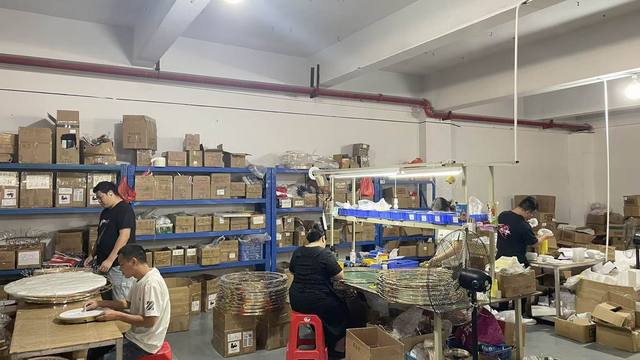
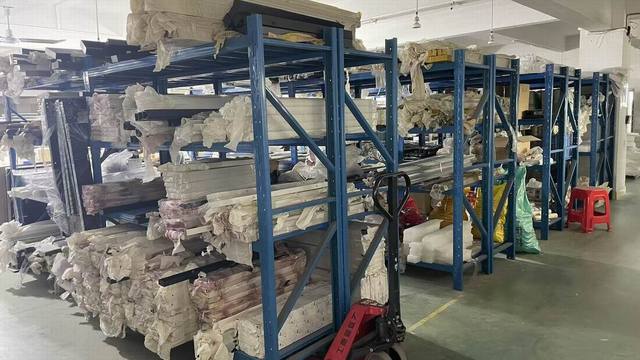
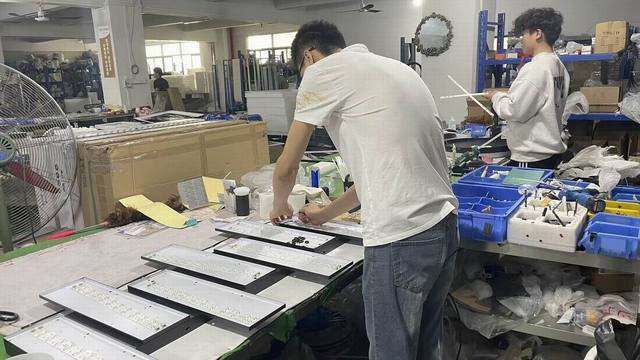
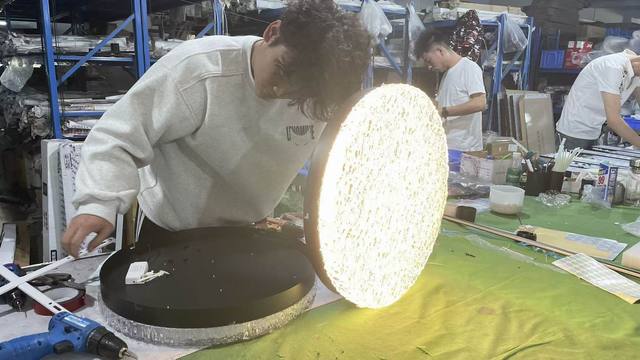
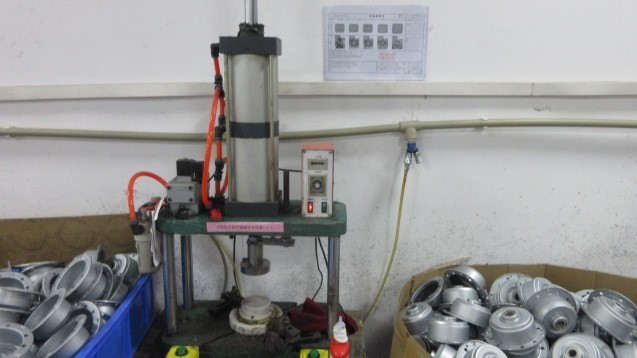
With a modern production facility covering more than 12,000 square meters and a workforce of over 180 skilled employees, Fanpro Light integrates product design, engineering, manufacturing, quality control, and international sales under one roof. The company operates multiple assembly lines and testing laboratories to ensure consistent product performance, durability, safety, and compliance with international standards.
Fanpro Light offers a comprehensive range of ceiling fan solutions, including smart WiFi ceiling fans, DC motor ceiling fans, ceiling fans with LED lighting, low-profile ceiling fans, decorative ceiling fans, outdoor ceiling fans, and commercial air movement systems. The company continuously invests in motor technology, energy-saving innovations, and intelligent control systems to meet evolving market demands.
As an experienced OEM and ODM manufacturing partner, Fanpro Light supports customers worldwide with customized designs, private labeling, packaging solutions, and product development services. Our products are exported to North America, Europe, Australia, Southeast Asia, the Middle East, and other international markets. Committed to quality, innovation, and long-term partnerships, we strive to provide reliable ceiling fan products and flexible manufacturing solutions that help customers strengthen their competitiveness in the global marketplace.
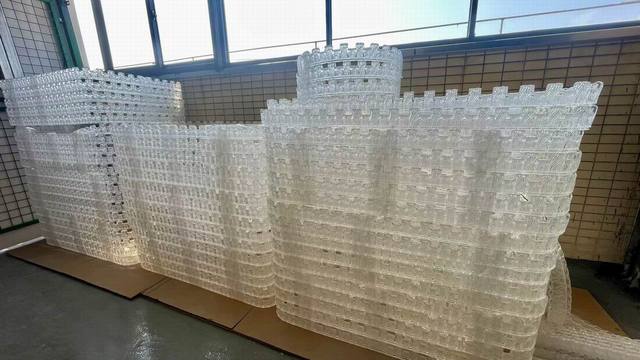
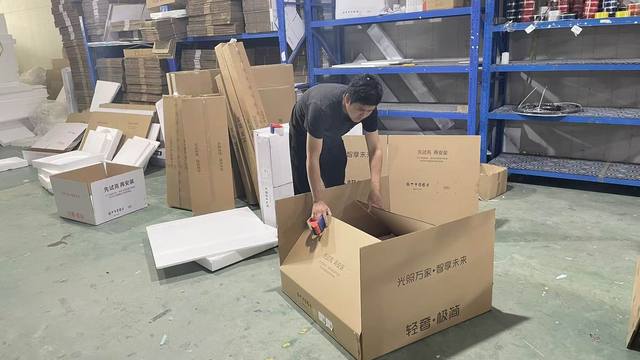
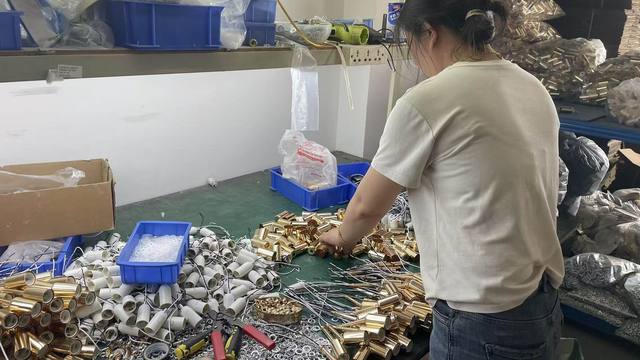

How localized industrial ecosystems drive cost efficiency, rapid prototyping, and shipping reliability
In the global HVAC sourcing space, manufacturing resilience is determined by the depth of the local supply chain. Operating from Dongguan, Guangdong—the world's premier electronic and mechanical hardware manufacturing hub—gives Fanpro Light a key geographical and logistical advantage. Within a 50-kilometer radius, we can access premium copper wire, precision bearings, electrical steel sheet laminations, high-grade plastics, and specialized PCB manufacturers. This high concentration of suppliers reduces material lead times and insulates our manufacturing pipelines from international logistics volatility.
Furthermore, our location enables rapid prototyping. During the ODM development phase, a custom CAD layout can be transformed into a functional CNC-milled prototype in days, compared to weeks in less integrated industrial zones. This efficiency helps our global clients bring modern, low-profile designs to market ahead of competitors. Additionally, our proximity to major ports like Shenzhen, Guangzhou, and Hong Kong guarantees flexible, cost-efficient shipping options, lowering landed costs for international distributors.
To assure long-term reliability, our testing facilities are equipped with state-of-the-art testing equipment. We run continuous wind-tunnel trials, motor temperature rise diagnostics, high-voltage breakdown evaluations, and rigorous salt-spray tests to ensure our fans can perform in demanding conditions—from high-humidity tropical resorts to corrosive chemical manufacturing plants.
Real-world engineering scenarios where flush-mount and low-profile systems solve structural problems
Modern commercial buildings often feature drop ceilings to hide structural supports and IT cabling, leaving limited floor-to-ceiling clearance. Conventional downrod fans are unusable here due to safety hazards. Our flush mount BLDC fans resolve this by mounting directly to the ceiling joists. This arrangement maintains the code-mandated 7-foot blade clearance while providing consistent air displacement, reducing reliance on expensive air conditioning ducting.
High humidity and airborne salt particles accelerate corrosion in standard metal fixtures. For beach resorts, open-air lobbies, and outdoor dining decks, we design flush mount fans featuring high-grade ABS blades and corrosion-resistant coatings. Their low-profile design also prevents damage from high winds, ensuring safe operation in open coastal environments.
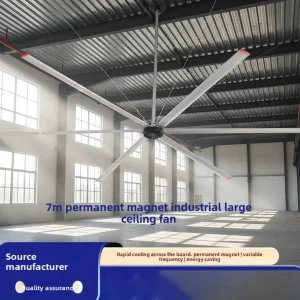
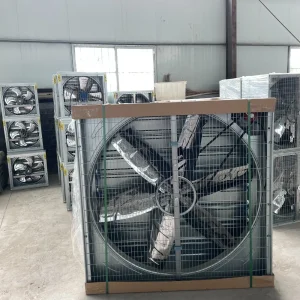
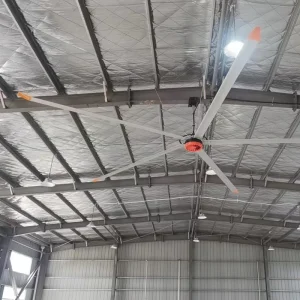
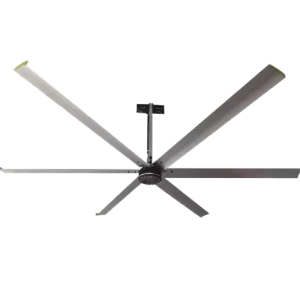
Industrial chemical plants require constant, reliable air circulation to prevent the buildup of fumes and optimize thermal conditions. However, overhead piping and conveyor systems restrict ceiling clearance. In these spaces, low-profile heavy-duty axial fans and HVLS ceiling fans with explosion-proof PMSM motors provide high-volume air movement without interfering with machinery, helping maintain a safe and productive workspace.
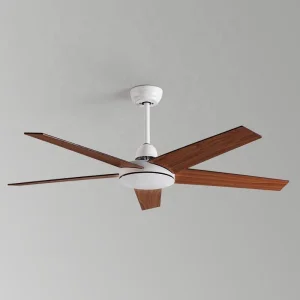
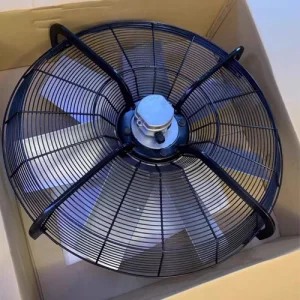
Explore our high-performance range of heavy-duty ventilation systems and decorative custom models
Direct technical answers from our engineering team on customization, installation, and performance
A standard downrod fan relies on a steel pipe extension to separate the rotating blades from the ceiling, creating an open air chamber. A flush mount (hugger) fan mounts directly to the ceiling bracket. The main structural difference is the design of the motor housing and blade angle. To prevent air starvation, flush mount fans use motor shrouds with built-in air vents and blades with localized twist profiles to maintain optimal cubic feet per minute (CFM) output despite the close proximity to the ceiling.
BLDC (Brushless DC) motors generate significantly less heat than standard AC motors. This is crucial for low-profile flush mount units, where the motor is positioned closer to insulation and ceiling materials. BLDC motors also run quieter and offer continuous speed adjustment. This allows operators to run the fan at lower speeds to save energy while maintaining gentle, consistent air movement.
We provide extensive customization, including housing finishes (matte black, brushed nickel, wood grain, or custom RAL powder coatings), blade materials (corrosion-proof ABS, CNC-milled structural wood, or dynamic lightweight aluminum), motor output tunings, integrated LED lighting arrays with color temperature tuning, and specialized control integrations (such as RF remote controllers, Tuya smart app controls, or RS485 Modbus connections for Building Management Systems).
At Fanpro Light, we implement a strict ISO 9001-certified quality control system. Our facilities feature clean testing zones, automated dynamic balancing setups, insulation resistance testers, and noise chambers. Every product run is evaluated for motor temperature rise, speed, current stability, and physical vibration before packaging, ensuring complete compliance with UL, CE, SAA, RoHS, and local electrical standards.
For custom ODM projects, initial 3D models and CAD layouts are typically prepared within 5 to 7 working days. Once approved, physical prototypes are manufactured and functionally tested within 15 to 20 days. Standard mass production runs generally require 30 to 45 days, depending on order size and custom material sourcing requirements.
 Fanpro Light