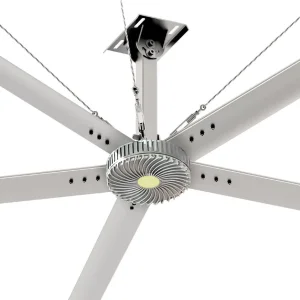
Engineered to deliver high volumetric flow rates with minimized electrical draw, providing safety and durability in cold-climate setups.
Industrial infrastructure within Finland operates under challenging meteorological parameters. With winter temperatures dropping below -20°C and energy pricing subject to volatility, space heating accounts for a substantial percentage of structural operating overheads. Heavy manufacturing sites, logistically intensive distribution hubs, and processing halls characterized by high vertical clearances (exceeding 6 meters) experience severe thermal stratification.
Thermal stratification acts as a physical barrier to energy conservation. Heat generated by primary hydronic, air-source, or radiant systems rises toward the ceiling profile due to buoyant density differentials. This creates a vertical temperature gradient of up to 1.5°C per meter. Consequently, maintaining a comfortable 18°C working temperature at ground level requires overheating the upper structural ceiling layers to temperatures above 30°C. This accelerates thermal loss through roofs and drives up energy costs.
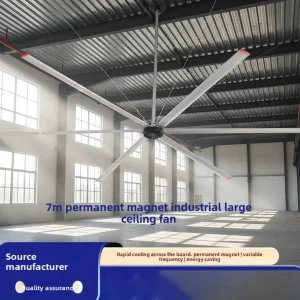
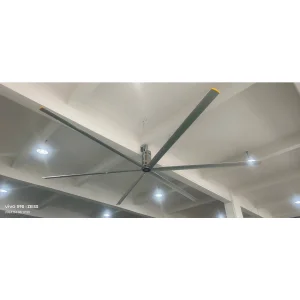
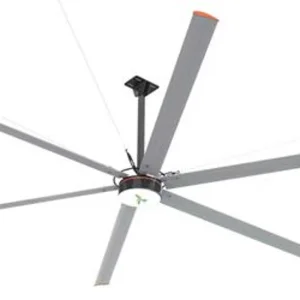
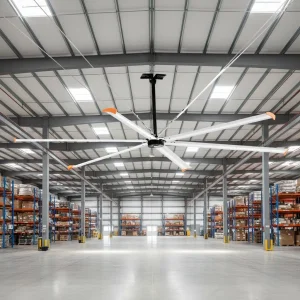
Our High-Volume Low-Speed (HVLS) fans address this by gently and continuously mixing the air layers. By introducing a massive, low-velocity column of air from the ceiling to the floor, they equalize temperatures across the vertical profile (destratification). This reduces ceiling-level heat buildup and can lower heating energy consumption by 20% to 30%.
Reduces vertical heat stratification to save up to 30% on space heating in cold Finnish winters.
Engineered in compliance with EU 327/2011 ErP efficiency thresholds for industrial fans.
Eliminates standard mechanical gearboxes to minimize friction, oil leak risks, and operating noise.
Maintains surface temperatures above dew point to prevent condensation on concrete floors.
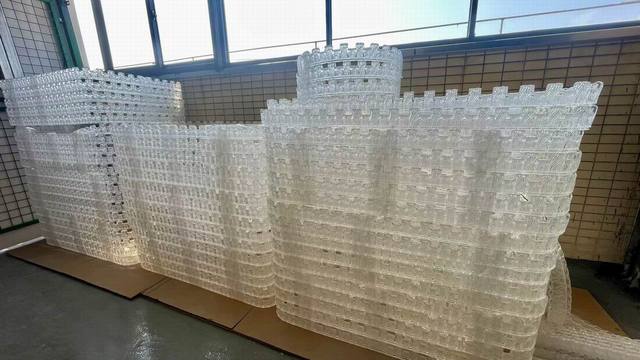
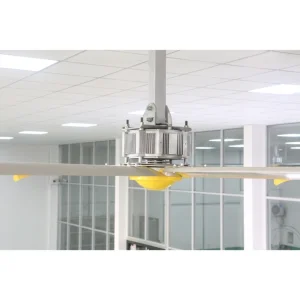
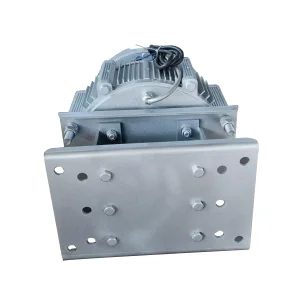
Traditional industrial fans rely on induction motors paired with gearboxes to achieve high torque at low speeds. However, gearbox configurations introduce challenges in cold, demanding environments like Finland, including mechanical wear, seal failure from temperature fluctuations, and oil leakage risks. Fanpro Light's PMSM (Permanent Magnet Synchronous Motor) direct-drive motors address these issues by eliminating the gearbox entirely.
The rotor uses high-relevance Neodymium-Iron-Boron (NdFeB) permanent magnets. This design ensures strong torque density and helps maintain high efficiency even at partial loads, aligning with the IE4/IE5 standards of EU energy policies. Our direct-drive PMSM models operate at noise levels below 40 dBA, making them well-suited for noise-sensitive industrial and commercial facilities.
Measured data comparing standard HVAC installations with Fanpro Light Direct-Drive PMSM HVLS integration.
Engineered configurations designed for specific industrial environments across Finland.
Protects stored inventory in logistics hubs like Vantaa and Tampere by managing condensation and Sweating Slab Syndrome (SSS) through continuous air movement.
Designed for high-temperature areas like metalworking and paper mills, providing cooling airflow for workers and helping dilute airborne particulates.
Features explosion-proof fan options with spark-resistant parts and sealed enclosures, suitable for chemical processing and woodworking facilities with combustible dust.
Established in 2012 in Dongguan, Guangdong, Dongguan Fanpro Light Co., Ltd. is a manufacturer of smart ceiling fans, DC motor fans, and energy-efficient air circulation systems for residential, commercial, and industrial use. Our 12,000-square-meter facility supports integrated product design, engineering, testing, and production under one roof.
We work with global clients, including in Northern Europe, to provide customizable OEM and ODM solutions. Our production facility uses dynamic balancing testers, motor dynamometers, and wind tunnels to verify airfoil efficiency, safety compliance, and structural integrity. Operating in the Dongguan manufacturing corridor allows us to maintain direct access to raw materials and logistics networks, helping us provide reliable delivery timelines for European procurement projects.
Our product catalog includes smart WiFi-enabled ceiling fans, low-profile fans, decorative commercial units, and heavy-duty industrial HVLS systems. We maintain quality control standards to ensure our products meet key global certifications, including CE, RoHS, and ErP requirements for the European market.
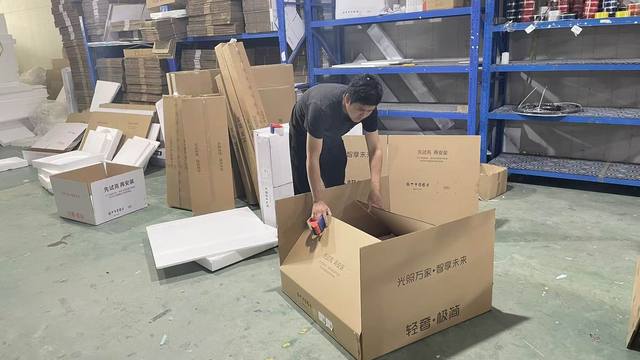

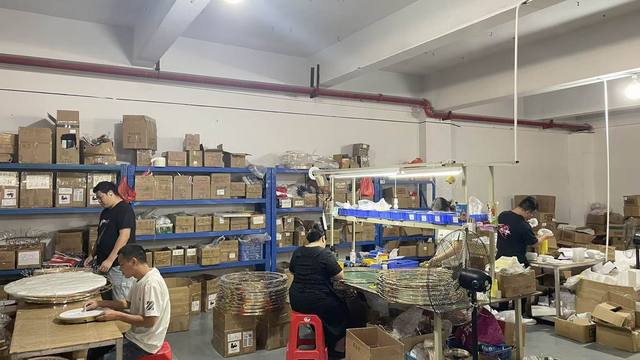
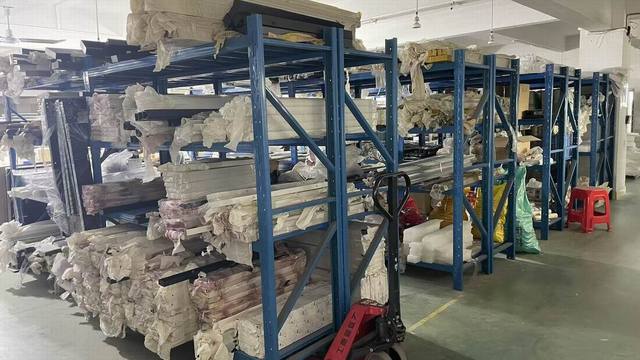
A look at our testing labs, motor winding systems, assembly lines, and warehouse operations.
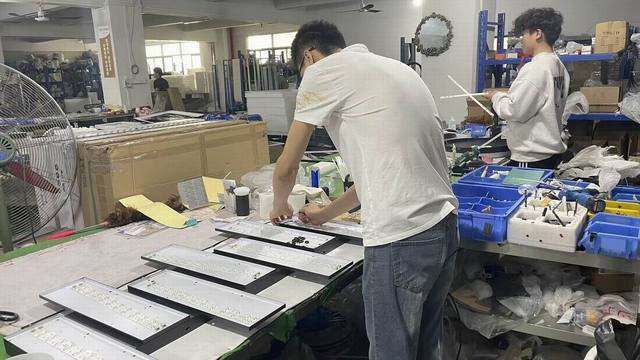
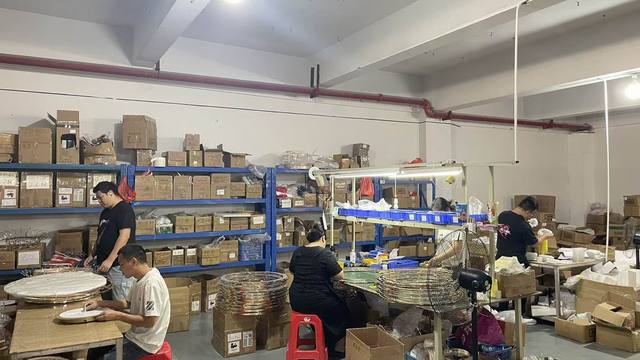
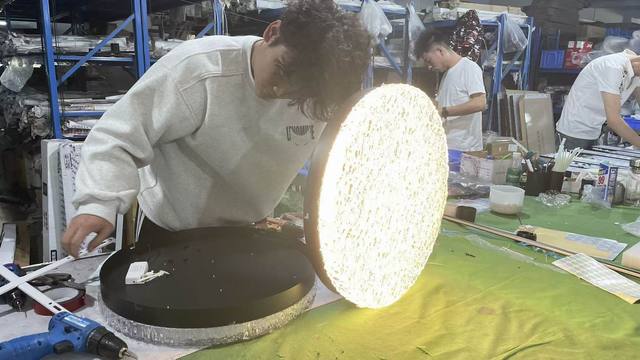

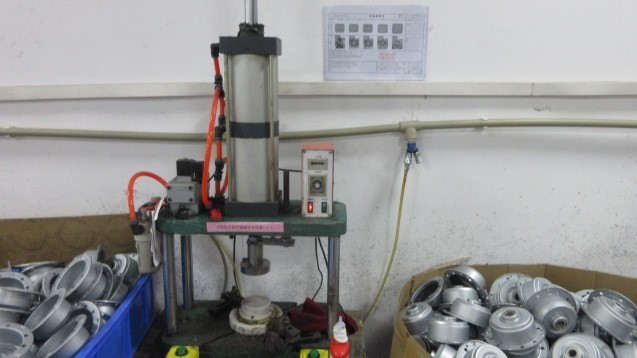
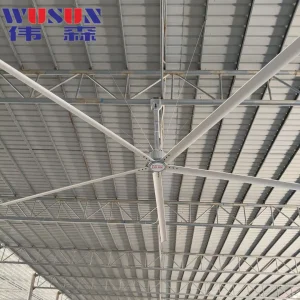
Select from our range of high-efficiency HVLS fans and ventilation systems designed for commercial and industrial use.
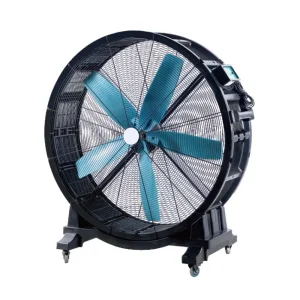
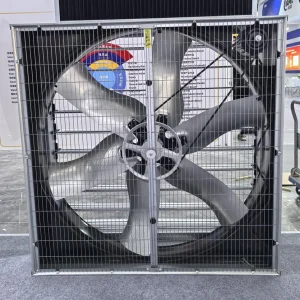
Additional products engineered for agricultural, poultry, and specific commercial layouts.
Engineering and procurement responses to common layout and design queries from Northern European projects.
During winter, warm air rises to the ceiling layer of high-clearance buildings. An HVLS fan operates at a low speed in reverse or forward direction to push this warm air down without creating draft currents. This equalizes the vertical temperature profile, reducing the heat loss through the roof and helping lower space heating energy use by 20% to 30%.
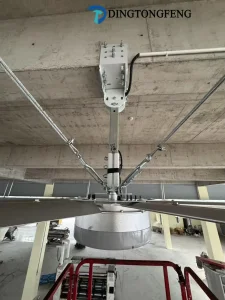
Our systems include multiple mechanical safety features: a steel safety ring to secure the hub to the motor shaft, secondary wire cables to connect the mounting structure to the ceiling beam, and automated VFD controls that stop the motor if vibration levels change.
Yes. Our industrial PMSM direct-drive motors and airfoils meet the European Union's ErP Directive (EU 327/2011) performance standards, facilitating project approvals and energy efficiency compliance.
Yes. Our Variable Frequency Drives support Modbus and analog 0-10V communication interfaces, allowing integration with centralized BMS networks to automate fan speeds based on real-time temperature sensors.
PMSM direct-drive fans eliminate the gearbox, which removes gear friction noise. This design keeps operating noise levels below 40 dBA, making them suitable for commercial settings, public areas, and quiet manufacturing zones.
In humid or transitional weather, concrete floors can reach temperatures below the dew point, causing condensation (Sweating Slab Syndrome). Continuous low-speed airflow from HVLS fans increases evaporation rates and aligns floor surface temperatures with ambient levels to keep floors dry.
Send us your floor plans and ceiling heights. Our engineering team will provide a customized airflow simulation and energy savings estimate for your facility.
 Fanpro Light