Designed to combat high ambient humidity and elevated temperatures in key economic regions from Kuala Lumpur to Johor Bahru. Explore our premium selection.
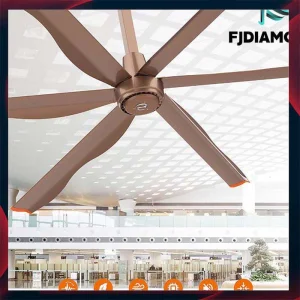
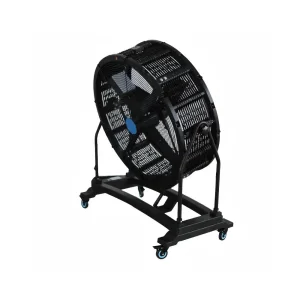
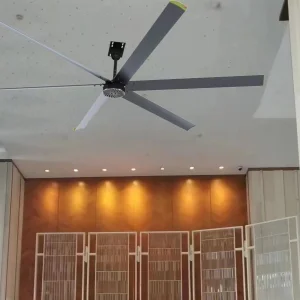
Malaysia sits squarely within the equatorial zone, experiencing high ambient temperatures ranging from 25°C to 35°C year-round, coupled with relative humidity levels that regularly exceed 80% to 90%. Under these severe thermodynamic conditions, traditional mechanical ventilation systems like high-speed exhaust fans often fail to provide thermal comfort. Instead, they consume massive amounts of electricity by moving hot, humid air without altering the boundary layer of moisture on human skin.
Conventional HVAC (Heating, Ventilation, and Air Conditioning) plants, while effective at lowering indoor ambient temperatures, face astronomical operational expenditures when cooling expansive commercial buildings. Open-plan showrooms, modern manufacturing warehouses, logistics facilities, and large food courts in regions like the Klang Valley, Penang, and Johor Bahru are subject to rapid infiltration of humid outdoor air.
As a result, installing high-volume, low-speed (HVLS) commercial ceiling fans has transitioned from an optional building upgrade to a critical component of macro-scale engineering and energy-saving designs. By introducing large-scale, low-velocity air currents, HVLS fans manipulate the convective heat transfer coefficient of the human body, providing a perceived cooling effect of 3°C to 5°C without the massive energy draw of compressor-driven AC systems.
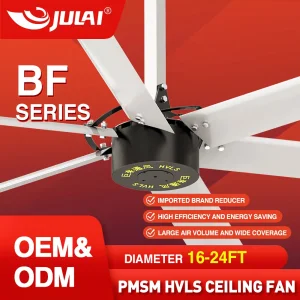
In the global commercial air movement space, technology has evolved from traditional induction motor-gearbox setups to highly integrated PMSM (Permanent Magnet Synchronous Motor) direct-drive configurations. Below is an engineering evaluation highlighting why modern Malaysian facility developers and architects prioritize PMSM technology:
By eliminating the mechanical gearbox, PMSM motors eliminate oil leakage risks, gear wear, and mechanical friction loss. This results in an extremely low noise profile (under 40dB) suitable for retail centers, showrooms, and educational spaces.
PMSM drives maintain higher motor efficiency (up to 95%) even at partial loads compared to standard induction motors. With electricity tariffs in Malaysia (TNB Commercial/Industrial Tariffs) rising, a 30% saving in running current leads to a rapid payback period.
Aircraft-grade aluminum alloy blades featuring integrated winglets prevent turbulence and reduce drag. Multi-tier safety structures, including safety cables, anti-fall rings, and dynamic blade connection brackets, ensure worry-free overhead operation.
As Malaysia pushes forward with the National Energy Transition Roadmap (NETR) and corporate ESG frameworks (such as Bursa Malaysia's sustainability reporting mandates), commercial architects and facility planners are under intense pressure to minimize carbon footprints. Buildings are evaluated for their Green Building Index (GBI) credentials, where thermal comfort and energy performance contribute significantly to overall certifications.
Integrating commercial HVLS fans into building layouts directly impacts two main GBI scoring criteria:
Globally, the commercial air movement market is observing a major shift towards smart building integration. Modbus, BACnet, and IoT-enabled controllers allow operations engineers to manage multiple HVLS units from a centralized building management system (BMS), reacting in real-time to internal temperature and humidity sensors.
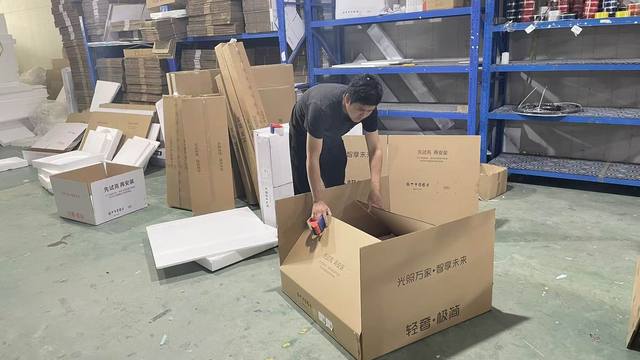
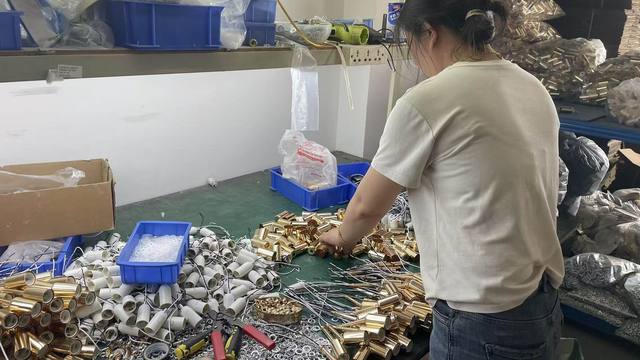
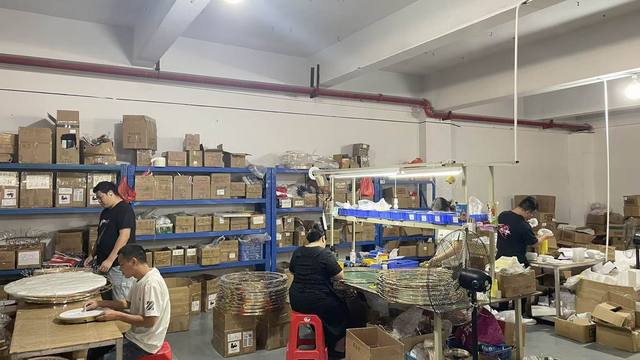
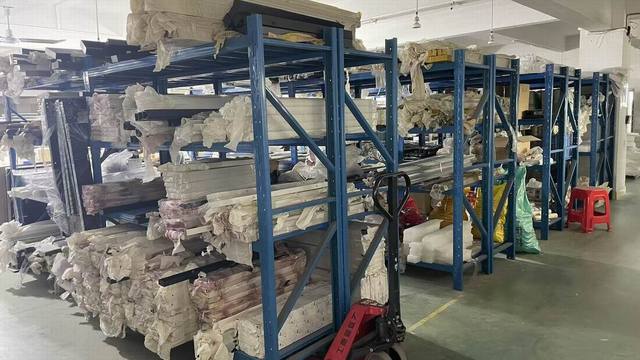
Dongguan Fanpro Light Co., Ltd. is a professional ceiling fan manufacturer specializing in the design, development, and production of smart ceiling fans, DC motor ceiling fans, and energy-efficient air circulation solutions for residential, commercial, and hospitality applications. Established in 2012, the company is located in Dongguan, Guangdong, one of China's leading manufacturing hubs, providing convenient access to global logistics networks and supply chains.
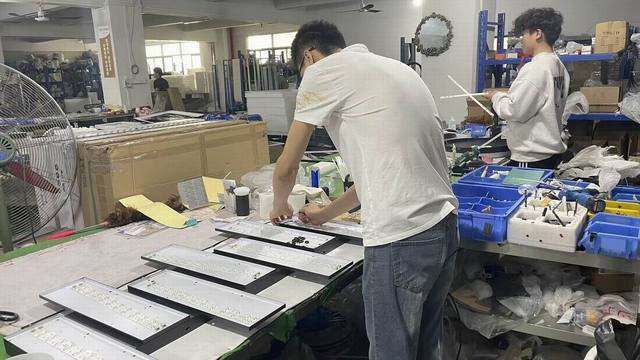
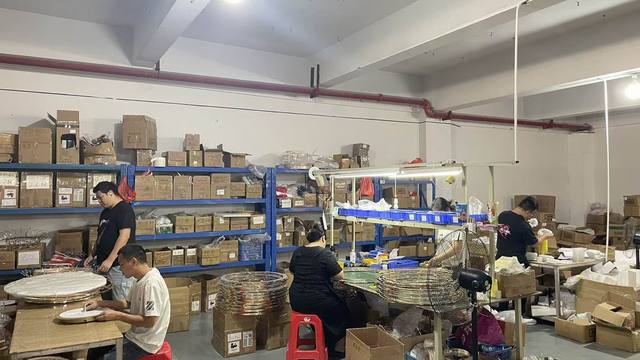
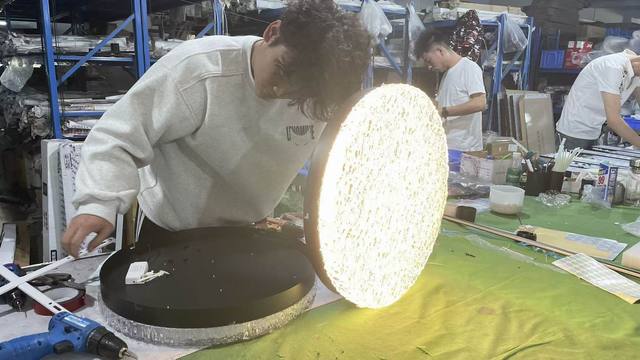
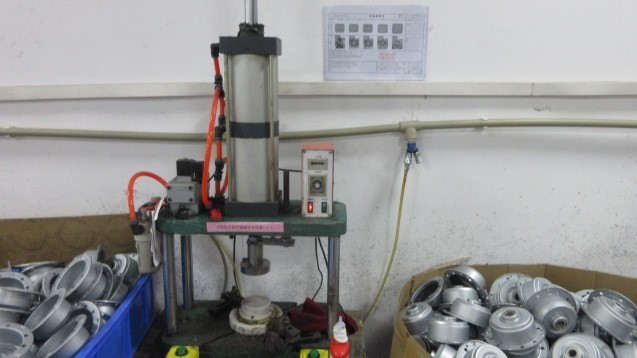
With a modern production facility covering more than 12,000 square meters and a workforce of over 180 skilled employees, Fanpro Light integrates product design, engineering, manufacturing, quality control, and international sales under one roof. The company operates multiple assembly lines and testing laboratories to ensure consistent product performance, durability, safety, and compliance with international standards.
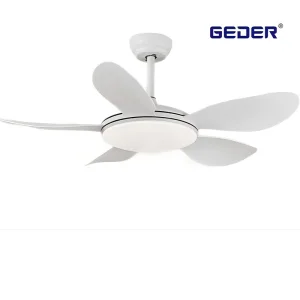
Fanpro Light offers a comprehensive range of ceiling fan solutions, including smart WiFi ceiling fans, DC motor ceiling fans, ceiling fans with LED lighting, low-profile ceiling fans, decorative ceiling fans, outdoor ceiling fans, and commercial air movement systems. The company continuously invests in motor technology, energy-saving innovations, and intelligent control systems to meet evolving market demands.
As an experienced OEM and ODM manufacturing partner, Fanpro Light supports customers worldwide with customized designs, private labeling, packaging solutions, and product development services. Its products are exported to North America, Europe, Australia, Southeast Asia, the Middle East, and other international markets.
Committed to quality, innovation, and long-term partnerships, Dongguan Fanpro Light Co., Ltd. strives to provide reliable ceiling fan products and flexible manufacturing solutions that help customers strengthen their competitiveness in the global marketplace.

Every commercial layout demands unique structural and aerodynamic attention. We categorize our macro-industrial ceiling fan deployments across key Malaysian commercial environments:
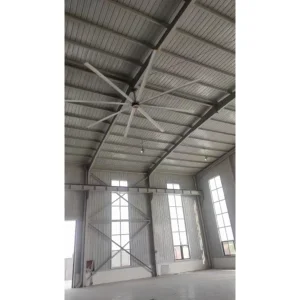
Vast heights of modern high-bay storage racks block air circulation, causing stagnant heat pockets to form. These hot pockets speed up food rot, damage electronics, and lower worker productivity. Setting up high-span 24ft HVLS fans creates continuous column flows that curve around stored materials, lowering humidity and sweat-induced safety hazards.
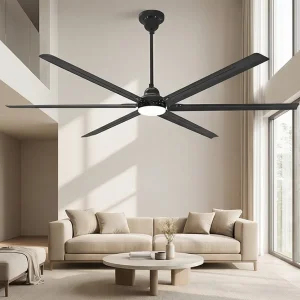
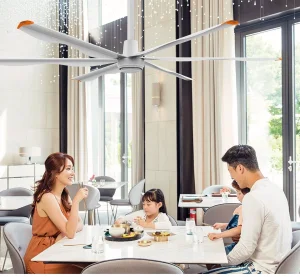
Customer comfort directly impacts retail metrics. With floor-to-ceiling glass facades creating greenhouse effects inside auto showrooms, standard AC systems struggle. Placing decorative and low-noise commercial DC ceiling fans creates a refreshing environment while maintaining clean aesthetics and whisper-quiet operations.
Multi-purpose sports complexes and high-density student auditoriums often face poor ventilation. Adding high-performance industrial ceiling fans keeps air fresh by extracting CO2, preventing the buildup of stuffy indoor air, and keeping running costs to a minimum compared to complex ventilation systems.
High humidity levels cause heat stress in livestock, directly lowering milk yields and animal health. Our heavy-duty IP55-rated industrial ceiling fans are built to withstand damp, dust-prone farm environments. They offer continuous, low-speed air movement to control temperatures and lower infection risks.
Explore our complete catalog of certified large-scale ceiling fans, direct-drive PMSM models, and portable drum systems tailored for Malaysian specifications.
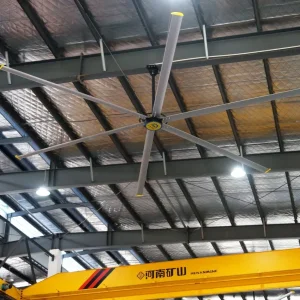
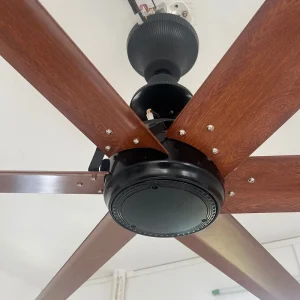
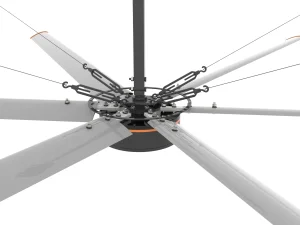
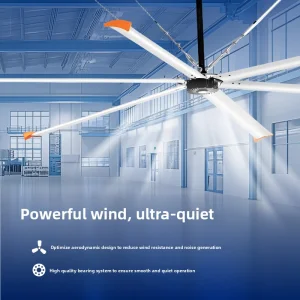
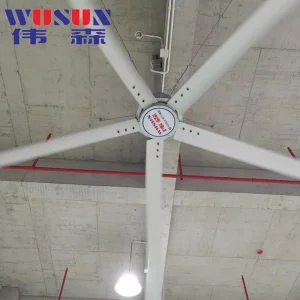
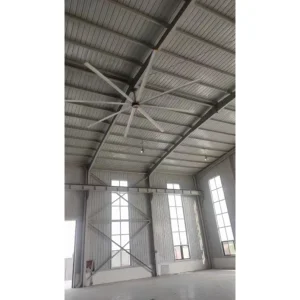
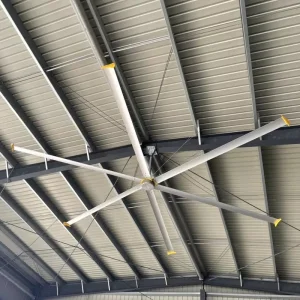
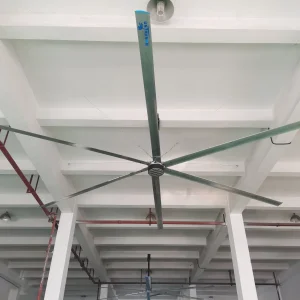
Large-scale HVLS commercial ceiling fans weigh between 80kg to 180kg, depending on the model diameter and motor type. Before installation, structural engineers must verify that the building's roof support structure (such as steel I-beams, H-beams, concrete columns, or timber trusses) can handle both the static weight and the dynamic torque generated during start-up.
For safe operation and maximum airflow efficiency, keep a minimum distance of 1.5 to 2.0 times the fan's blade width between the blades and the ceiling or roof deck. This spacing lets air flow freely into the fan blades. Additionally, keep a safety clearance of at least 3.0 meters between the floor and the lowest point of the blades, and keep blades at least 1.0 meter away from walls, lighting fixtures, structural beams, and fire sprinkler systems to avoid turbulent airflow.
Most commercial applications utilize a three-phase 380V-415V AC system, whereas smaller retail locations rely on a single-phase 220V-240V AC supply. Variable Frequency Drives (VFDs) and permanent magnet motor controllers should be equipped with built-in line reactors and electromagnetic interference (EMI) filters. These features block electrical noise from traveling back into the power grid, preventing interference with sensitive retail POS computers or factory automation equipment.
 Fanpro Light